
üzerinden
Facebook
An investment that protects your money from inflation sounds like a no-brainer, right?
Not necessarily.
Wes breaks down Treasury Inflation-Protected Securities (TIPS) and explains why their inflation protection comes with a trade-off: lower interest yields compared with traditional Treasury bonds.
While TIPS can have a place in your retirement portfolio, Wes says they aren't necessarily a must-have—and their long-term returns can be surprisingly similar to other bonds.
🎧 Are you protecting your retirement savings the right way? Hear Wes explain how to think about inflation protection and your fixed-income investments on The Clark Howard Podcast.
Listen at Clark.com/podcast or watch at YouTube.com/clark.
#WesMoss #RetirementPlanning #TIPS #Inflation #Bonds #Investing #RetirementSavings #PersonalFinance

30

üzerinden
Instagram
Retirement Savings Tip: Spend the least possible on needs.
One of the smartest ways to find more money for retirement savings is to take a closer look at what you're spending on everyday necessities.
When you need to replace something essential, spend as little as you can without sacrificing quality or safety.
A car is a perfect example. Buying more car than you need can put a serious strain on your finances. If it's time to replace yours, consider a reliable used car instead of a new one.
And don't stop there. Apply that same thinking to groceries, clothing, and other everyday expenses.
Remember, every dollar you don't spend unnecessarily is a dollar you can put toward your retirement savings and your future financial security.
#retirementsavings #retirementplanning #moneymanagement #smartspending #financialdiscipline #savingmoney #financialsecurity #financialempowerment #suzeorman

67

üzerinden
Instagram
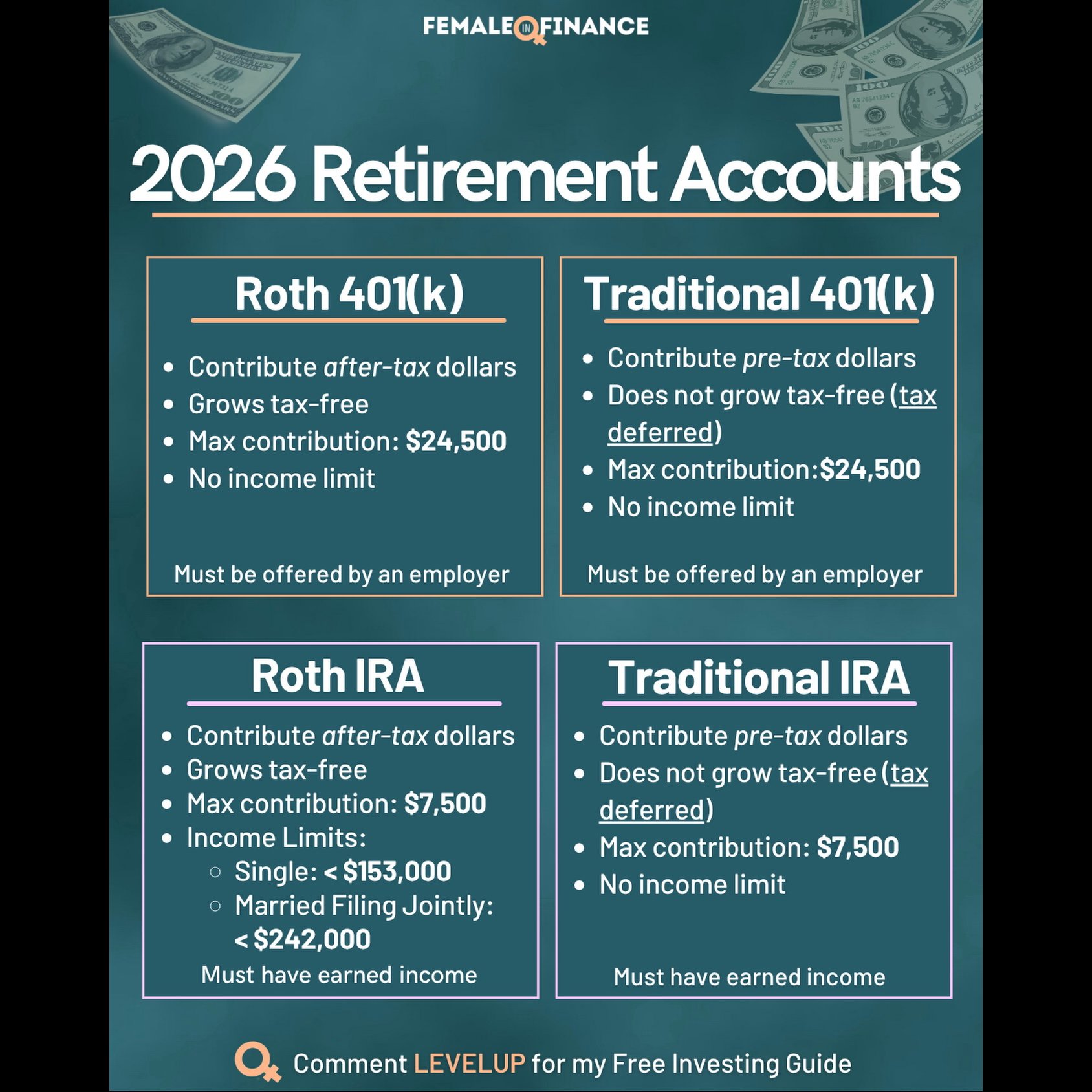
Planning for retirement can feel overwhelming, but knowing the differences between common retirement accounts can help you make informed decisions.
Here’s a quick breakdown:
💸 401(k) Plans are Employer-Sponsored Accounts
👉🏼 Roth 401(k) allows you to contribute after-tax dollars (taxes are paid upfront). Your money grows tax-free, and withdrawals are tax-free in retirement.
👉🏼 Traditional 401(k) uses pre-tax dollars, which lowers your taxable income today. The money grows tax-deferred, but you’ll pay taxes when you withdraw in retirement.
💸 IRAs are Individual Retirement Accounts that you open on your own as long as you have earned income.
👉🏼 Roth IRA contributions are made with after-tax dollars. The money grows tax-free, and withdrawals are tax-free in retirement. There are income limits: single filers must earn less than $153k, and married couples filing jointly must earn less than $242k. You must have earned income to contribute.
👉🏼 Traditional IRA contributions use pre-tax dollars, offering immediate tax deductions. The money grows tax-deferred, and you’ll pay taxes on withdrawals in retirement.
So which account is right for you?
If you expect to be in a lower tax bracket in retirement, Traditional accounts might make sense. If you expect to be in a higher tax bracket or want tax-free income in retirement, consider Roth accounts.
💸 Comment LEVELUP and I’ll send you my free 2026 Investing Guide! ✨
-Leandra
.
.
.
#retirementplanning #401k #rothira #retirementsavings #financialeducation
594
Sona ulaştın 🎉