

🚨 **BREAKING: TAIWAN IS CRACKING DOWN ON AI CHIP EXPORTS TO CHINA!** 🇹🇼🇨🇳🇺🇸
The global AI race just took another major turn! 🤯
Taiwan is preparing to tighten restrictions on advanced AI chip exports to China, aligning its policies more closely with the United States.
🔥 **Here's why this is a BIG deal:**
🔹 **Stricter AI Chip Controls:** Taiwan plans to restrict exports of advanced semiconductors and AI servers.
🔹 **Criminal Penalties:** Unauthorized shipments of restricted AI hardware to China could become a criminal offense.
🔹 **US–China Tech Rivalry:** The move strengthens Taiwan's alignment with Washington as competition for AI dominance intensifies.
🔹 **Global Supply Chain Impact:** Companies such as Nvidia and TSMC operate at the heart of an increasingly sensitive semiconductor industry.
📈 **What does this mean for investors?**
With AI chips powering everything from data centers to advanced robotics, tighter export restrictions could reshape competition, supply chains, and semiconductor investment strategies.
🌎 The battle for AI dominance isn't just about technology anymore — it's about geopolitics, trade, and economic power.
💬 **BIG QUESTION: Will these restrictions strengthen America's AI advantage, or accelerate China's push to develop its own advanced chips?**
🔗 Source: [Yahoo Finance](https://finance.yahoo.com/technology/ai/articles/taiwan-curb-ai-chip-exports-054957385.html)
#AI #Nvidia #TSMC #Semiconductors #Taiwan #China #ArtificialIntelligence #TechNews #StockMarket #Geopolitics #Investing
The global AI race just took another major turn! 🤯
Taiwan is preparing to tighten restrictions on advanced AI chip exports to China, aligning its policies more closely with the United States.
🔥 **Here's why this is a BIG deal:**
🔹 **Stricter AI Chip Controls:** Taiwan plans to restrict exports of advanced semiconductors and AI servers.
🔹 **Criminal Penalties:** Unauthorized shipments of restricted AI hardware to China could become a criminal offense.
🔹 **US–China Tech Rivalry:** The move strengthens Taiwan's alignment with Washington as competition for AI dominance intensifies.
🔹 **Global Supply Chain Impact:** Companies such as Nvidia and TSMC operate at the heart of an increasingly sensitive semiconductor industry.
📈 **What does this mean for investors?**
With AI chips powering everything from data centers to advanced robotics, tighter export restrictions could reshape competition, supply chains, and semiconductor investment strategies.
🌎 The battle for AI dominance isn't just about technology anymore — it's about geopolitics, trade, and economic power.
💬 **BIG QUESTION: Will these restrictions strengthen America's AI advantage, or accelerate China's push to develop its own advanced chips?**
🔗 Source: [Yahoo Finance](https://finance.yahoo.com/technology/ai/articles/taiwan-curb-ai-chip-exports-054957385.html)
#AI #Nvidia #TSMC #Semiconductors #Taiwan #China #ArtificialIntelligence #TechNews #StockMarket #Geopolitics #Investing
1
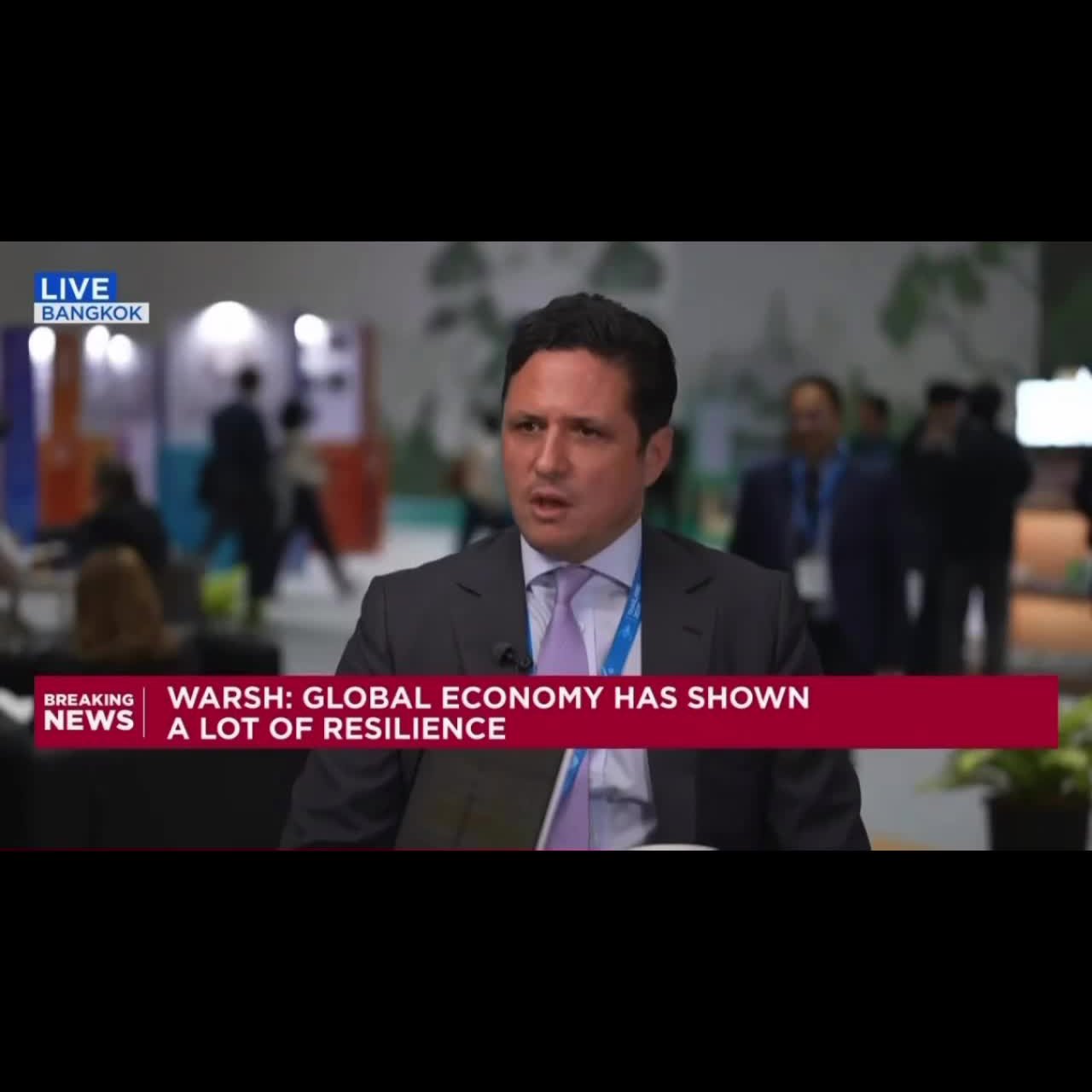
Speaking to CNBC from the International Monetary Fund /The World Bank Group Annual Meetings in Bangkok, one issue I focused on was the extraordinary capital intensity of the AI build-out & the disparity between the bond and equity markets.
As AI (SI?) and energy security are reshaping the global economy, there is a mounting pressure in the debt financing side.
Given tech can become obsolete much faster than longdated debt gets repaid, the real question is who earns the economics and who is left holding the duration and financing risk?
As Kevin Warsh emphasised today in Bangkok, the AI revolution will create extraordinary value in the medium term. However, capital markets are now beginning the harder job of determining where that value actually accrues - and equity markets need to follow suit.
#AI #IMFMeetings #CapitalMarkets #Geopolitics Tanto Capital Partners
As AI (SI?) and energy security are reshaping the global economy, there is a mounting pressure in the debt financing side.
Given tech can become obsolete much faster than longdated debt gets repaid, the real question is who earns the economics and who is left holding the duration and financing risk?
As Kevin Warsh emphasised today in Bangkok, the AI revolution will create extraordinary value in the medium term. However, capital markets are now beginning the harder job of determining where that value actually accrues - and equity markets need to follow suit.
#AI #IMFMeetings #CapitalMarkets #Geopolitics Tanto Capital Partners
48

February 28, 2026- the whole world changed.
Crazy how one event can trigger a chain reaction that reaches across the entire world. 🌎
From oil prices and inflation to government borrowing costs, mortgage rates, and geopolitical instability, the ripple effects can be far bigger than most people realize.
And the dominoes are still falling.
#Economy #StockMarket #Investing #Geopolitics
Educational purposes only. This content is not intended to provide individualized investment, tax, or financial advice.
Crazy how one event can trigger a chain reaction that reaches across the entire world. 🌎
From oil prices and inflation to government borrowing costs, mortgage rates, and geopolitical instability, the ripple effects can be far bigger than most people realize.
And the dominoes are still falling.
#Economy #StockMarket #Investing #Geopolitics
Educational purposes only. This content is not intended to provide individualized investment, tax, or financial advice.

954
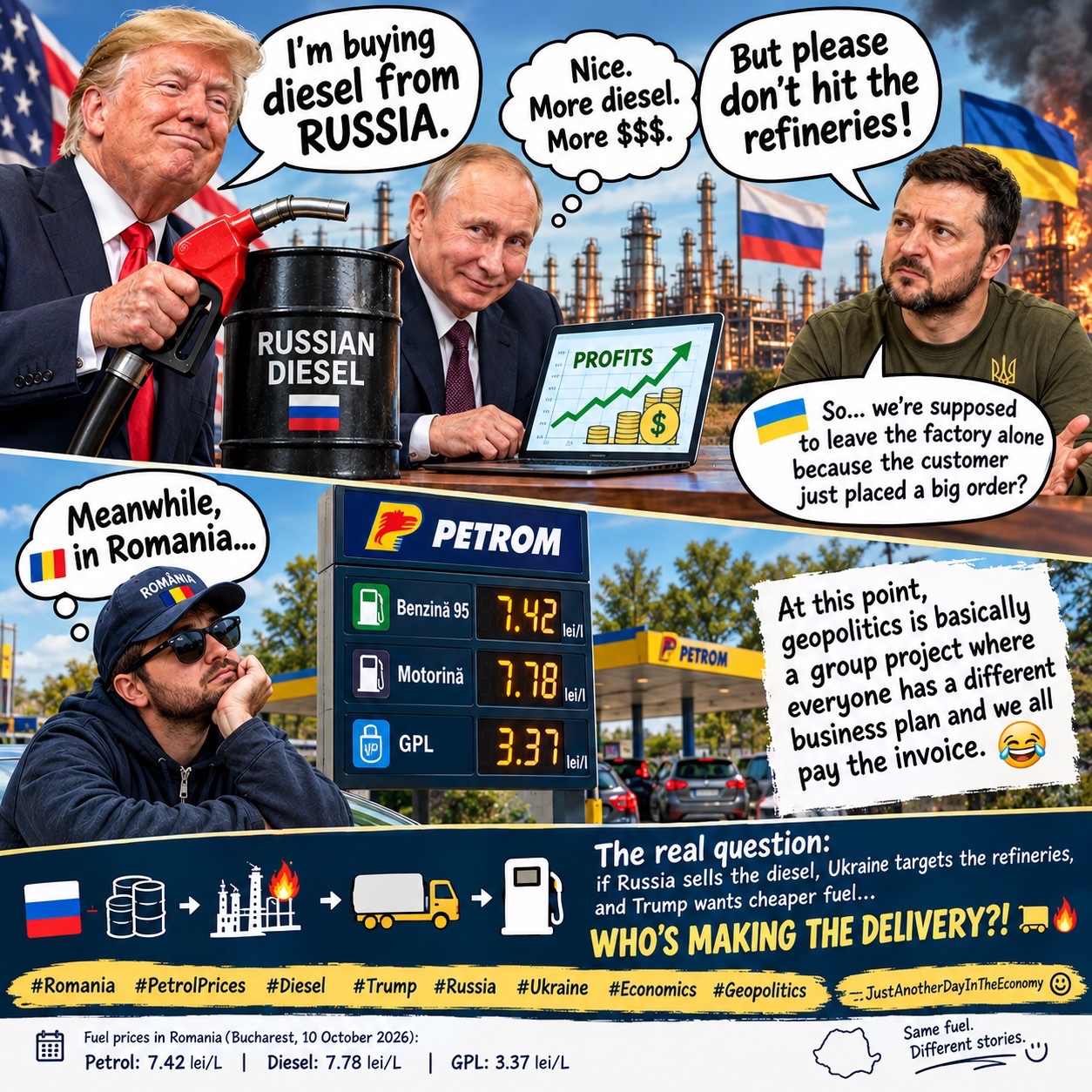
🇷🇴⛽ **ROMANIA WATCHING THE WORLD OIL MARKET LIKE… WHAT IS THIS SEASON FINALE?!** 🍿😂
Trump: “I’m buying diesel from Russia.” 🇺🇸🤝🇷🇺
Also Trump to Ukraine: “But please don’t hit the refineries!” 🙏🛢️
Ukraine: “So… we’re supposed to leave the factory alone because the customer just placed a big order?” 🇺🇦💥🤔
Putin: *opens Excel and starts calculating profits* 📈💰
Meanwhile, in Romania, we’re just standing at the petrol station watching the numbers spin like a casino slot machine. 🎰⛽🇷🇴
**At this point, geopolitics is basically a group project where everyone has a different business plan and we all pay the invoice.** 😂
The real question: if Russia sells the diesel, Ukraine targets the refineries, and Trump wants cheaper fuel… WHO’S MAKING THE DELIVERY?! 🚛🔥
#Romania #PetrolPrices #Diesel #Trump #Russia #Ukraine #Economics #Geopolitics #JustAnotherDayInTheEconomy
Trump: “I’m buying diesel from Russia.” 🇺🇸🤝🇷🇺
Also Trump to Ukraine: “But please don’t hit the refineries!” 🙏🛢️
Ukraine: “So… we’re supposed to leave the factory alone because the customer just placed a big order?” 🇺🇦💥🤔
Putin: *opens Excel and starts calculating profits* 📈💰
Meanwhile, in Romania, we’re just standing at the petrol station watching the numbers spin like a casino slot machine. 🎰⛽🇷🇴
**At this point, geopolitics is basically a group project where everyone has a different business plan and we all pay the invoice.** 😂
The real question: if Russia sells the diesel, Ukraine targets the refineries, and Trump wants cheaper fuel… WHO’S MAKING THE DELIVERY?! 🚛🔥
#Romania #PetrolPrices #Diesel #Trump #Russia #Ukraine #Economics #Geopolitics #JustAnotherDayInTheEconomy
1

via
X
The U.S. and China extended their trade truce through Jan. 10, 2027, but major disputes remain. Rare-earth deliveries, agricultural purchases, Taiwan, Iran and AI dominated talks around the Trump-Xi summit. #China #USA #Trade #Geopolitics
https://t.co/nFWcXLuLCN
https://t.co/nFWcXLuLCN