

🏛️ Microsoft fa un passo indietro dal più grande data center IA pianificato nel Regno Unito
Il progetto: l’impianto da £2 miliardi di Nscale a Loughton, Essex, che doveva ospitare un supercomputer finanziato da Microsoft 🧠
Il passo indietro: un problema di rete significa che l’alimentazione del sito, prevista entro la fine di quest’anno, non arriverà fino agli anni 2030 ⚡
Nscale dice di restare sulla strada:
📍 Resta impegnata a Loughton e nel Regno Unito
📍 Esplorando fonti di energia alternative
📍 Guardando ad altri siti di espansione nel Regno Unito
📍 Collaborazione con Microsoft “rimane forte” su progetti in Norvegia, Portogallo e Stati Uniti 🌍
Il tempismo colpisce. Proprio lo scorso mese, Microsoft ha detto che parte del suo investimento di 30 miliardi di dollari nel Regno Unito finanzierà proprio questo supercomputer. Si prevedeva anche che il sito createsse 250 posti di lavoro permanenti 🗳️
È un promemoria che, nella corsa all’IA, chip e capitale sono solo metà della storia. L’infrastruttura energetica potrebbe essere il vero collo di bottiglia 🔌
#Microsoft #MSFT #AI #DataCentres #UKTech #Infrastructure
Il progetto: l’impianto da £2 miliardi di Nscale a Loughton, Essex, che doveva ospitare un supercomputer finanziato da Microsoft 🧠
Il passo indietro: un problema di rete significa che l’alimentazione del sito, prevista entro la fine di quest’anno, non arriverà fino agli anni 2030 ⚡
Nscale dice di restare sulla strada:
📍 Resta impegnata a Loughton e nel Regno Unito
📍 Esplorando fonti di energia alternative
📍 Guardando ad altri siti di espansione nel Regno Unito
📍 Collaborazione con Microsoft “rimane forte” su progetti in Norvegia, Portogallo e Stati Uniti 🌍
Il tempismo colpisce. Proprio lo scorso mese, Microsoft ha detto che parte del suo investimento di 30 miliardi di dollari nel Regno Unito finanzierà proprio questo supercomputer. Si prevedeva anche che il sito createsse 250 posti di lavoro permanenti 🗳️
È un promemoria che, nella corsa all’IA, chip e capitale sono solo metà della storia. L’infrastruttura energetica potrebbe essere il vero collo di bottiglia 🔌
#Microsoft #MSFT #AI #DataCentres #UKTech #Infrastructure

🚨 **BREAKING: TAIWAN IS CRACKING DOWN ON AI CHIP EXPORTS TO CHINA!** 🇹🇼🇨🇳🇺🇸
The global AI race just took another major turn! 🤯
Taiwan is preparing to tighten restrictions on advanced AI chip exports to China, aligning its policies more closely with the United States.
🔥 **Here's why this is a BIG deal:**
🔹 **Stricter AI Chip Controls:** Taiwan plans to restrict exports of advanced semiconductors and AI servers.
🔹 **Criminal Penalties:** Unauthorized shipments of restricted AI hardware to China could become a criminal offense.
🔹 **US–China Tech Rivalry:** The move strengthens Taiwan's alignment with Washington as competition for AI dominance intensifies.
🔹 **Global Supply Chain Impact:** Companies such as Nvidia and TSMC operate at the heart of an increasingly sensitive semiconductor industry.
📈 **What does this mean for investors?**
With AI chips powering everything from data centers to advanced robotics, tighter export restrictions could reshape competition, supply chains, and semiconductor investment strategies.
🌎 The battle for AI dominance isn't just about technology anymore — it's about geopolitics, trade, and economic power.
💬 **BIG QUESTION: Will these restrictions strengthen America's AI advantage, or accelerate China's push to develop its own advanced chips?**
🔗 Source: [Yahoo Finance](https://finance.yahoo.com/technology/ai/articles/taiwan-curb-ai-chip-exports-054957385.html)
#AI #Nvidia #TSMC #Semiconductors #Taiwan #China #ArtificialIntelligence #TechNews #StockMarket #Geopolitics #Investing
The global AI race just took another major turn! 🤯
Taiwan is preparing to tighten restrictions on advanced AI chip exports to China, aligning its policies more closely with the United States.
🔥 **Here's why this is a BIG deal:**
🔹 **Stricter AI Chip Controls:** Taiwan plans to restrict exports of advanced semiconductors and AI servers.
🔹 **Criminal Penalties:** Unauthorized shipments of restricted AI hardware to China could become a criminal offense.
🔹 **US–China Tech Rivalry:** The move strengthens Taiwan's alignment with Washington as competition for AI dominance intensifies.
🔹 **Global Supply Chain Impact:** Companies such as Nvidia and TSMC operate at the heart of an increasingly sensitive semiconductor industry.
📈 **What does this mean for investors?**
With AI chips powering everything from data centers to advanced robotics, tighter export restrictions could reshape competition, supply chains, and semiconductor investment strategies.
🌎 The battle for AI dominance isn't just about technology anymore — it's about geopolitics, trade, and economic power.
💬 **BIG QUESTION: Will these restrictions strengthen America's AI advantage, or accelerate China's push to develop its own advanced chips?**
🔗 Source: [Yahoo Finance](https://finance.yahoo.com/technology/ai/articles/taiwan-curb-ai-chip-exports-054957385.html)
#AI #Nvidia #TSMC #Semiconductors #Taiwan #China #ArtificialIntelligence #TechNews #StockMarket #Geopolitics #Investing
1

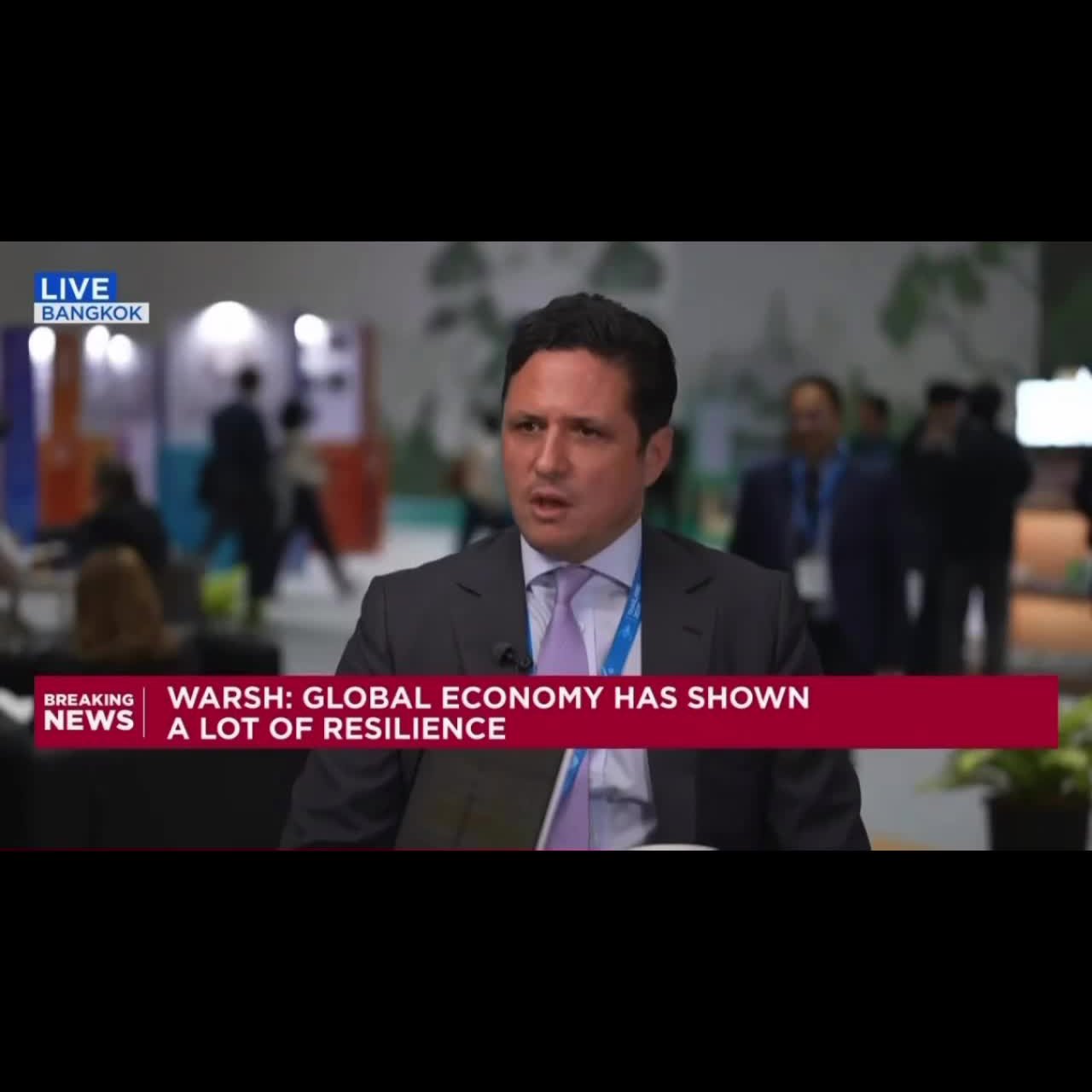
Speaking to CNBC from the International Monetary Fund /The World Bank Group Annual Meetings in Bangkok, one issue I focused on was the extraordinary capital intensity of the AI build-out & the disparity between the bond and equity markets.
As AI (SI?) and energy security are reshaping the global economy, there is a mounting pressure in the debt financing side.
Given tech can become obsolete much faster than longdated debt gets repaid, the real question is who earns the economics and who is left holding the duration and financing risk?
As Kevin Warsh emphasised today in Bangkok, the AI revolution will create extraordinary value in the medium term. However, capital markets are now beginning the harder job of determining where that value actually accrues - and equity markets need to follow suit.
#AI #IMFMeetings #CapitalMarkets #Geopolitics Tanto Capital Partners
As AI (SI?) and energy security are reshaping the global economy, there is a mounting pressure in the debt financing side.
Given tech can become obsolete much faster than longdated debt gets repaid, the real question is who earns the economics and who is left holding the duration and financing risk?
As Kevin Warsh emphasised today in Bangkok, the AI revolution will create extraordinary value in the medium term. However, capital markets are now beginning the harder job of determining where that value actually accrues - and equity markets need to follow suit.
#AI #IMFMeetings #CapitalMarkets #Geopolitics Tanto Capital Partners
48

Roboter belästigt Mädchen? Nein!
Bitte vermenschlicht Technologie nicht. Roboter handeln entweder
1. ferngesteuert
2. programmiert
3. autonom
Und autonom nicht basierend auf einer eigenen Agenda, sondern ausgerichtet auf einen Aufgabenbereich.
Verteufelt nicht die Technologie, sondern die Menschen, die sie missbrauchen.
#ai #roboter #belästigung #autonom
Bitte vermenschlicht Technologie nicht. Roboter handeln entweder
1. ferngesteuert
2. programmiert
3. autonom
Und autonom nicht basierend auf einer eigenen Agenda, sondern ausgerichtet auf einen Aufgabenbereich.
Verteufelt nicht die Technologie, sondern die Menschen, die sie missbrauchen.
#ai #roboter #belästigung #autonom

166

via
X
Goodweek, a Los Angeles-headquartered French startup positioning itself as a one-stop #AI management platform for #SMBs, has raised a €10.69 million #Seed round. 🇫🇷 🤖 💶
https://t.co/ns11oqovTA https://t.co/YfJu9p6EkK
https://t.co/ns11oqovTA https://t.co/YfJu9p6EkK

4