

üzerinden
LinkedIn
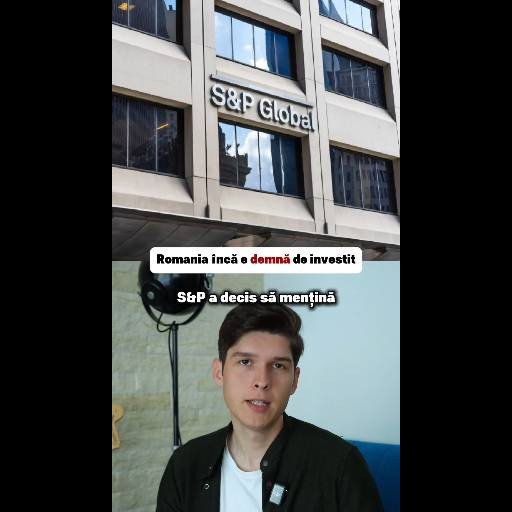
S&P a menținut ratingul României, iar BET a deschis azi cu +2,7%. 18 din 20 de companii din index au urcat de la prima tranzacție.
Părerea mea completă despre BVB o găsești în ultimul clip de pe YouTube, canalul eduardinvesteste.
#bvb #bet #investitii #bursa #romania #educatiefinanciara
Părerea mea completă despre BVB o găsești în ultimul clip de pe YouTube, canalul eduardinvesteste.
#bvb #bet #investitii #bursa #romania #educatiefinanciara
2


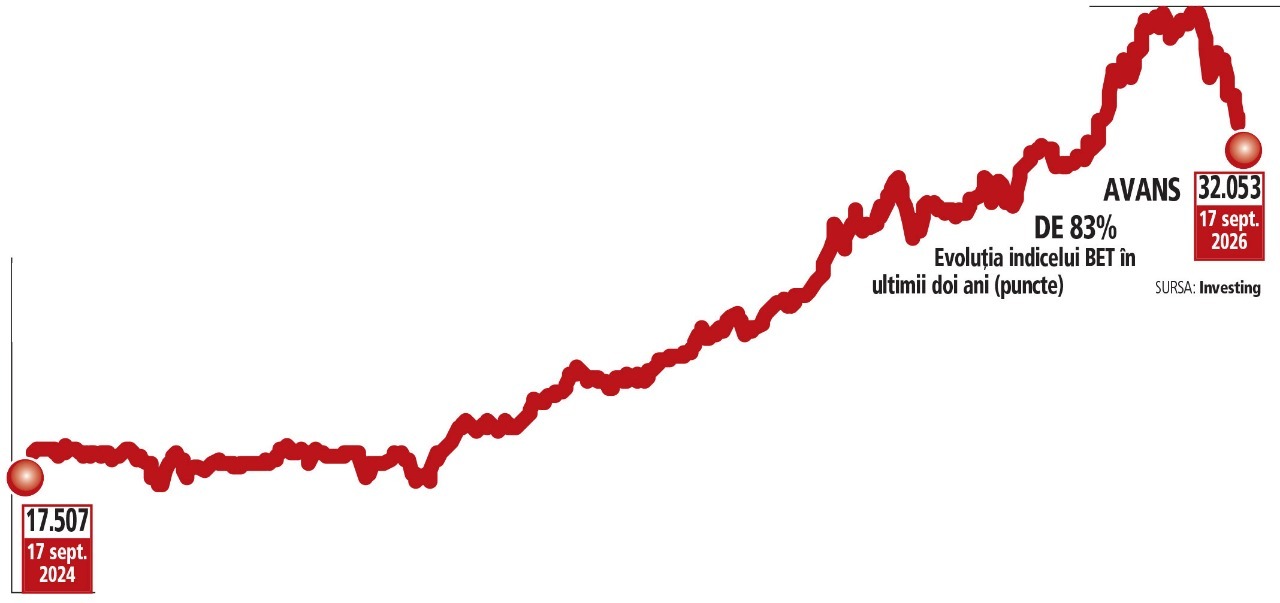
📉 Bucharest Stock Exchange: BET is now 12% below its latest all-time high. What is driving the correction — and what comes next?
After a strong rally in the first part of 2026, the Romanian equity market has entered a more volatile phase.
The BET index is currently 12.1% below its August 19 all-time high, has lost around 3.5% over the past week, and 13 of the last 20 trading sessions have closed in negative territory.
The correction appears to be driven by a combination of factors: profit-taking after the strong gains recorded earlier this year, economic and political uncertainty, persistent inflationary pressures, higher energy costs, and increasingly demanding valuations.
At the same time, the changing investor mix is adding another layer of volatility. Equity funds, ETFs and retail investors are playing a growing role in daily trading flows, potentially amplifying market moves in both directions.
Thursday offered a striking example of just how volatile sentiment has become: BET recovered from an intraday decline of nearly 3% to close around 1% higher.
Political developments were also part of the market backdrop, with President Nicușor Dan nominating MEP Siegfried Mureșan for prime minister, reducing part of the political uncertainty weighing on Romanian assets.
The key question from here is whether listed companies can deliver financial results strong enough to justify current valuations — and whether investor confidence can stabilize after several weeks of increased volatility.
For investors, the next phase may be less about broad market momentum and more about earnings, valuations and stock selection.
Source: Ziarul Financiar (ZF), 18 September 2026
#BVB #BucharestStockExchange #BET #Romania #CapitalMarkets #Investing #Equities #FinancialMarkets #EmergingMarkets
After a strong rally in the first part of 2026, the Romanian equity market has entered a more volatile phase.
The BET index is currently 12.1% below its August 19 all-time high, has lost around 3.5% over the past week, and 13 of the last 20 trading sessions have closed in negative territory.
The correction appears to be driven by a combination of factors: profit-taking after the strong gains recorded earlier this year, economic and political uncertainty, persistent inflationary pressures, higher energy costs, and increasingly demanding valuations.
At the same time, the changing investor mix is adding another layer of volatility. Equity funds, ETFs and retail investors are playing a growing role in daily trading flows, potentially amplifying market moves in both directions.
Thursday offered a striking example of just how volatile sentiment has become: BET recovered from an intraday decline of nearly 3% to close around 1% higher.
Political developments were also part of the market backdrop, with President Nicușor Dan nominating MEP Siegfried Mureșan for prime minister, reducing part of the political uncertainty weighing on Romanian assets.
The key question from here is whether listed companies can deliver financial results strong enough to justify current valuations — and whether investor confidence can stabilize after several weeks of increased volatility.
For investors, the next phase may be less about broad market momentum and more about earnings, valuations and stock selection.
Source: Ziarul Financiar (ZF), 18 September 2026
#BVB #BucharestStockExchange #BET #Romania #CapitalMarkets #Investing #Equities #FinancialMarkets #EmergingMarkets

🇷🇴 **Romania Finance & Markets Update — September 22, 2026**
Romanian equities finished the session higher, while interest rates, the leu and energy investment remained key themes for investors.
📈 **Bucharest stocks gained:** The benchmark **BET index rose 0.72% to 32,140.01 points**, while the energy-focused **BET-NG climbed 1.02%**. Electrica gained 1.60% and OMV Petrom added 0.51%, while Banca Transilvania closed 0.51% lower.
💶 **The leu remained closely watched:** The BNR reference rate for September 22 stood at approximately **5.2647 lei per euro**, with the dollar at **4.5934 lei**.
🏦 **Borrowing costs stayed elevated:** Three-month ROBOR was unchanged at **5.84%**, while six-month ROBOR edged up to **5.93%**. The published IRCC reference rate for Q1 2026 was **5.56%**, keeping financing costs an important issue for households and companies.
⚡ **Energy investment remained a major economic theme:** Industry discussions highlighted the need for greater investment not only in new generation capacity, but also in storage, electricity networks and interconnections as Romania works to strengthen its energy system.
🌍 At the same time, tighter global monetary policy continues to matter for Romania through financing costs and investor sentiment.
**What to watch next:** the leu, domestic interest rates, BVB momentum and investment in Romania’s energy infrastructure.
#Romania #Finance #BVB #BET #BNR #ROBOR #Investing #Economy #BucharestStockExchange #Energy
Romanian equities finished the session higher, while interest rates, the leu and energy investment remained key themes for investors.
📈 **Bucharest stocks gained:** The benchmark **BET index rose 0.72% to 32,140.01 points**, while the energy-focused **BET-NG climbed 1.02%**. Electrica gained 1.60% and OMV Petrom added 0.51%, while Banca Transilvania closed 0.51% lower.
💶 **The leu remained closely watched:** The BNR reference rate for September 22 stood at approximately **5.2647 lei per euro**, with the dollar at **4.5934 lei**.
🏦 **Borrowing costs stayed elevated:** Three-month ROBOR was unchanged at **5.84%**, while six-month ROBOR edged up to **5.93%**. The published IRCC reference rate for Q1 2026 was **5.56%**, keeping financing costs an important issue for households and companies.
⚡ **Energy investment remained a major economic theme:** Industry discussions highlighted the need for greater investment not only in new generation capacity, but also in storage, electricity networks and interconnections as Romania works to strengthen its energy system.
🌍 At the same time, tighter global monetary policy continues to matter for Romania through financing costs and investor sentiment.
**What to watch next:** the leu, domestic interest rates, BVB momentum and investment in Romania’s energy infrastructure.
#Romania #Finance #BVB #BET #BNR #ROBOR #Investing #Economy #BucharestStockExchange #Energy
📉 Bucharest Stock Exchange: BET is now 12% below its latest all-time high. What is driving the correction — and what comes next?
After a strong rally in the first part of 2026, the Romanian equity market has entered a more volatile phase.
The BET index is currently 12.1% below its August 19 all-time high, has lost around 3.5% over the past week, and 13 of the last 20 trading sessions have closed in negative territory.
The correction appears to be driven by a combination of factors: profit-taking after the strong gains recorded earlier this year, economic and political uncertainty, persistent inflationary pressures, higher energy costs, and increasingly demanding valuations.
At the same time, the changing investor mix is adding another layer of volatility. Equity funds, ETFs and retail investors are playing a growing role in daily trading flows, potentially amplifying market moves in both directions.
Thursday offered a striking example of just how volatile sentiment has become: BET recovered from an intraday decline of nearly 3% to close around 1% higher.
Political developments were also part of the market backdrop, with President Nicușor Dan nominating MEP Siegfried Mureșan for prime minister, reducing part of the political uncertainty weighing on Romanian assets.
The key question from here is whether listed companies can deliver financial results strong enough to justify current valuations — and whether investor confidence can stabilize after several weeks of increased volatility.
For investors, the next phase may be less about broad market momentum and more about earnings, valuations and stock selection.
Source: Ziarul Financiar (ZF), 18 September 2026
#BVB #BucharestStockExchange #BET #Romania #CapitalMarkets #Investing #Equities #FinancialMarkets #EmergingMarkets
After a strong rally in the first part of 2026, the Romanian equity market has entered a more volatile phase.
The BET index is currently 12.1% below its August 19 all-time high, has lost around 3.5% over the past week, and 13 of the last 20 trading sessions have closed in negative territory.
The correction appears to be driven by a combination of factors: profit-taking after the strong gains recorded earlier this year, economic and political uncertainty, persistent inflationary pressures, higher energy costs, and increasingly demanding valuations.
At the same time, the changing investor mix is adding another layer of volatility. Equity funds, ETFs and retail investors are playing a growing role in daily trading flows, potentially amplifying market moves in both directions.
Thursday offered a striking example of just how volatile sentiment has become: BET recovered from an intraday decline of nearly 3% to close around 1% higher.
Political developments were also part of the market backdrop, with President Nicușor Dan nominating MEP Siegfried Mureșan for prime minister, reducing part of the political uncertainty weighing on Romanian assets.
The key question from here is whether listed companies can deliver financial results strong enough to justify current valuations — and whether investor confidence can stabilize after several weeks of increased volatility.
For investors, the next phase may be less about broad market momentum and more about earnings, valuations and stock selection.
Source: Ziarul Financiar (ZF), 18 September 2026
#BVB #BucharestStockExchange #BET #Romania #CapitalMarkets #Investing #Equities #FinancialMarkets #EmergingMarkets
3
1
🌍 **Markets are starting the week with a new inflation dilemma.**
Oil is back near **$97/barrel for Brent**, as geopolitical tensions around the Strait of Hormuz raise concerns about energy supply. That matters because higher energy prices can feed directly into inflation — and potentially keep interest rates higher for longer.
At the same time, Asian tech stocks are rallying, helped by optimism around AI and stronger economic data. But investors are facing a difficult balancing act: **growth vs. inflation, risk appetite vs. higher yields.**
🇷🇴 **Romania is worth watching too.**
The BET index closed Friday at **34,414 points, down 1.03%**, after reaching an intraday high of almost 34,969. The index remains heavily influenced by banks and energy names such as Banca Transilvania, OMV Petrom, Romgaz and Hidroelectrica.
One particularly interesting development: **Electro-Alfa International could enter the BET index**, potentially replacing Sphera Franchise Group following the latest index review.
📌 **The big question for investors this week:**
If energy prices remain elevated, will inflation become the dominant market story again — and how will that affect Romanian equities and bonds?
#Finance #Markets #Investing #Romania #BVB #BET #Stocks #Inflation #InterestRates #Oil #Economy
Oil is back near **$97/barrel for Brent**, as geopolitical tensions around the Strait of Hormuz raise concerns about energy supply. That matters because higher energy prices can feed directly into inflation — and potentially keep interest rates higher for longer.
At the same time, Asian tech stocks are rallying, helped by optimism around AI and stronger economic data. But investors are facing a difficult balancing act: **growth vs. inflation, risk appetite vs. higher yields.**
🇷🇴 **Romania is worth watching too.**
The BET index closed Friday at **34,414 points, down 1.03%**, after reaching an intraday high of almost 34,969. The index remains heavily influenced by banks and energy names such as Banca Transilvania, OMV Petrom, Romgaz and Hidroelectrica.
One particularly interesting development: **Electro-Alfa International could enter the BET index**, potentially replacing Sphera Franchise Group following the latest index review.
📌 **The big question for investors this week:**
If energy prices remain elevated, will inflation become the dominant market story again — and how will that affect Romanian equities and bonds?
#Finance #Markets #Investing #Romania #BVB #BET #Stocks #Inflation #InterestRates #Oil #Economy

7