
Geopolitics is no longer something that sits around the edges of business. Increasingly, it is becoming part of the operating model itself.
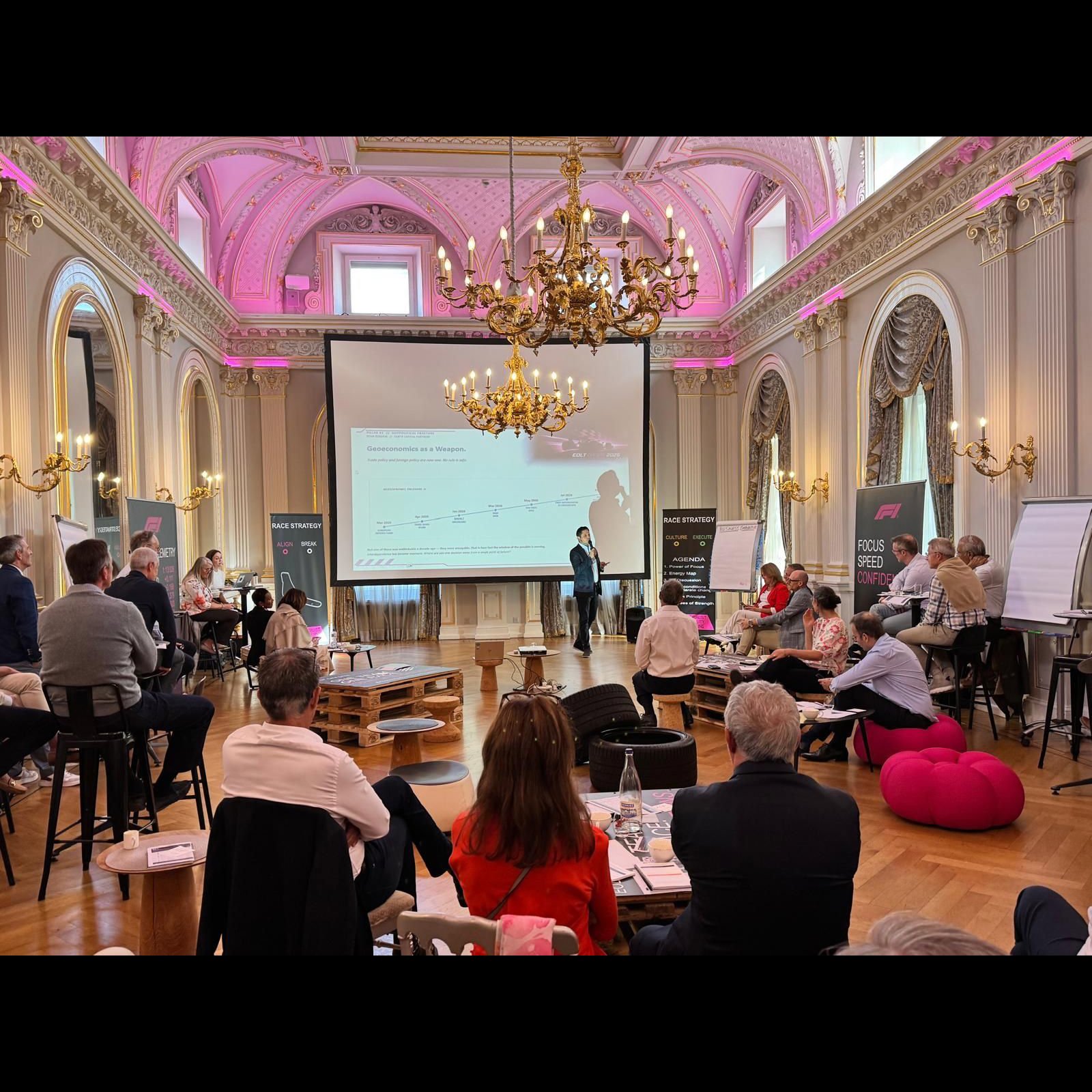
Back in Vevey this week with Nestlé’s Operations Leadership Team, discussing The Great Transition, and what a more fragmented, geopolitically contested world means for global businesses.
We covered geoeconomics, industrial policy, supplychain security, shifting trade corridors and the growing intersection between national security and corporate strategy, and macroeconomics.
Thank you to Stephanie Hart,
Roy Silva - Magbanua and the Nestlé and Emeritus teams for having me back in Vevey for this invigorating session.
#Geopolitics #macroeconomics #Leadership #SupplyChains
91


Euro-zone inflation is moving in the wrong direction again.
Inflation climbed to 3.3% in August, up from 2.9% in July, with higher energy prices doing most of the damage. That puts inflation well above the ECB’s 2% target and strengthens the case for another interest-rate hike.
What makes this particularly interesting is that underlying inflation remains comparatively contained. Core inflation eased to 2.4%, suggesting that the current pressure is still largely an energy shock rather than a broad-based acceleration across the economy.
For businesses and investors, the message is clear: Europe may be entering another period of higher-for-longer borrowing costs, even while economic growth remains vulnerable.
Energy markets, geopolitics and monetary policy are once again tightly connected — and the ECB’s next move will be one to watch closely.
#Inflation #ECB #Eurozone #InterestRates #Economy #Markets #Energy #Macroeconomics
1

Romania’s finance story this week is all about one word: credibility.
The fiscal picture has improved from the 2024 peak, but the adjustment remains difficult. The European Commission recently noted that Romania’s deficit fell to 7.9% of GDP in 2025, helped by consolidation measures including tax increases and freezes on wages and pensions.
At the same time, inflation remains a key pressure point. BNR revised its end-2026 inflation forecast upward to 5.5%, from 3.9%, reinforcing expectations that monetary policy will stay cautious.
For investors and companies, the message is clear: Romania still has strong long-term potential, but short-term confidence will depend on political stability, fiscal discipline, and the government’s ability to keep EU commitments on track.
What to watch next: the formation of a stable government, deficit execution, inflation data, and Romania’s access to EU funding.
#Romania #Finance #Economy #BNR #FiscalPolicy #CEE #Investing #Macroeconomics
3
📉 A single country's data just pushed the Eurozone economy into contraction.
Ireland's GDP plunged 12.1% in Q1 2026, dragging the Eurozone from a previously estimated +0.1% growth rate to a -0.2% contraction.
But the headline doesn't tell the full story.
Ireland's economic figures are heavily influenced by multinational corporations and cross-border financial flows, making GDP exceptionally volatile and, according to some economists, nearly impossible to predict with precision.
What's particularly noteworthy is that excluding Ireland, Eurozone growth remained relatively stable at around 0.2% for the quarter. Meanwhile, inflation continues to run above the ECB's target, increasing the likelihood of further interest rate hikes despite signs of slowing growth.
Key takeaway: Economic data can sometimes obscure as much as it reveals. Looking beneath the headline numbers is essential for understanding the true health of an economy.
#Eurozone #Economy #GDP #Ireland #Inflation #ECB #Macroeconomics #EconomicOutlook #Finance #Markets
3

Google Maps & The Macroeconomics of Traffic: Balancing the Cost of Time 🗺️📉
⏱️ Time is the Ultimate Currency: Every minute spent sitting idling in traffic is unrecoverable dead capital. It hits productivity, burns expensive fuel, and increases wear-and-tear costs.
📈 Opportunity Cost: Choosing a route that is 5 km longer but 10 minutes faster is an active capital reallocation. You are paying a literal premium (fuel/wear) to "buy back" liquid time.
📉 The Supply Chain Ripple: When gridlocks happen at macro scale, logistics costs spike, asset velocity slows down, and inflation ticks up.
The Bottom Line: Efficiency isn't just about saving physical distance; it’s about minimizing total friction. In navigating traffic or managing investments, the winning strategy avoids the bottlenecks to keep human and financial capital moving. 🚗💼
https://www.youtube.com/watch?v=kS-CGkiPetQ
#GoogleMaps #Macroeconomics #TimeIsMoney #OpportunityCost #Efficiency #RoutingMath
6