

Win
📊Romania’s public finances are showing signs of improvement.
The latest budget data for the first eight months of 2026 shows Romania’s fiscal deficit falling to **2.89% of GDP**, from **4.51%** in the same period of 2025. In nominal terms, the deficit declined by roughly **31%**, to **RON 59.4 billion**.
A key driver has been stronger government revenue: total revenues increased **11.4% year-on-year**, while expenditures grew by **4.2%**. VAT receipts rose particularly strongly, up **25.2%**, while EU funds and other donor inflows increased by almost **38%**.
At the same time, personnel spending declined compared with last year, while public investment continued to receive significant funding.
For businesses and investors, the numbers point to continued fiscal consolidation—but Romania’s ability to maintain the trend while supporting economic growth and investment will remain one of the key themes to watch through the rest of 2026.
#Romania #Finance #Economy #FiscalPolicy #Investment #Business #CEE
The latest budget data for the first eight months of 2026 shows Romania’s fiscal deficit falling to **2.89% of GDP**, from **4.51%** in the same period of 2025. In nominal terms, the deficit declined by roughly **31%**, to **RON 59.4 billion**.
A key driver has been stronger government revenue: total revenues increased **11.4% year-on-year**, while expenditures grew by **4.2%**. VAT receipts rose particularly strongly, up **25.2%**, while EU funds and other donor inflows increased by almost **38%**.
At the same time, personnel spending declined compared with last year, while public investment continued to receive significant funding.
For businesses and investors, the numbers point to continued fiscal consolidation—but Romania’s ability to maintain the trend while supporting economic growth and investment will remain one of the key themes to watch through the rest of 2026.
#Romania #Finance #Economy #FiscalPolicy #Investment #Business #CEE
1
Finanțele din România intră într-o etapă în care disciplina financiară contează mai mult ca oricând.
Pentru companii, antreprenori și investitori, nu mai este suficient să urmărești doar veniturile. Cash-flow-ul, costul finanțării, fiscalitatea, productivitatea și capacitatea de a investi inteligent devin elemente esențiale pentru creștere.
Într-un mediu economic în continuă schimbare, avantajul îl au cei care:
• își cunosc cifrele în detaliu;
• construiesc rezerve și planifică pe mai multe scenarii;
• investesc cu disciplină, nu din impuls;
• urmăresc schimbările fiscale și economice;
• transformă datele financiare în decizii concrete.
România continuă să ofere oportunități importante pentru business și investiții, dar succesul financiar va depinde tot mai mult de calitatea deciziilor, nu doar de viteza de creștere.
**Finanțele sănătoase nu înseamnă doar profit. Înseamnă control, reziliență și opțiuni pentru viitor.**
#Romania #Finance #Finante #Investitii #Business #Economie #Antreprenoriat
Pentru companii, antreprenori și investitori, nu mai este suficient să urmărești doar veniturile. Cash-flow-ul, costul finanțării, fiscalitatea, productivitatea și capacitatea de a investi inteligent devin elemente esențiale pentru creștere.
Într-un mediu economic în continuă schimbare, avantajul îl au cei care:
• își cunosc cifrele în detaliu;
• construiesc rezerve și planifică pe mai multe scenarii;
• investesc cu disciplină, nu din impuls;
• urmăresc schimbările fiscale și economice;
• transformă datele financiare în decizii concrete.
România continuă să ofere oportunități importante pentru business și investiții, dar succesul financiar va depinde tot mai mult de calitatea deciziilor, nu doar de viteza de creștere.
**Finanțele sănătoase nu înseamnă doar profit. Înseamnă control, reziliență și opțiuni pentru viitor.**
#Romania #Finance #Finante #Investitii #Business #Economie #Antreprenoriat


📉 Bucharest Stock Exchange: BET is now 12% below its latest all-time high. What is driving the correction — and what comes next?
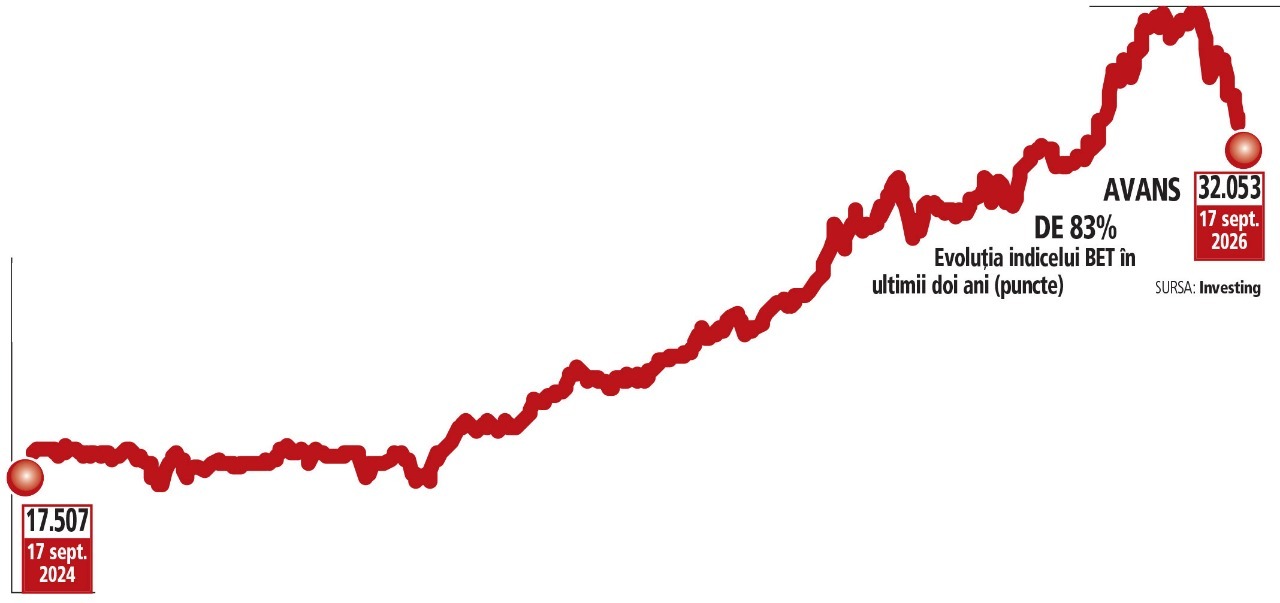
After a strong rally in the first part of 2026, the Romanian equity market has entered a more volatile phase.
The BET index is currently 12.1% below its August 19 all-time high, has lost around 3.5% over the past week, and 13 of the last 20 trading sessions have closed in negative territory.
The correction appears to be driven by a combination of factors: profit-taking after the strong gains recorded earlier this year, economic and political uncertainty, persistent inflationary pressures, higher energy costs, and increasingly demanding valuations.
At the same time, the changing investor mix is adding another layer of volatility. Equity funds, ETFs and retail investors are playing a growing role in daily trading flows, potentially amplifying market moves in both directions.
Thursday offered a striking example of just how volatile sentiment has become: BET recovered from an intraday decline of nearly 3% to close around 1% higher.
Political developments were also part of the market backdrop, with President Nicușor Dan nominating MEP Siegfried Mureșan for prime minister, reducing part of the political uncertainty weighing on Romanian assets.
The key question from here is whether listed companies can deliver financial results strong enough to justify current valuations — and whether investor confidence can stabilize after several weeks of increased volatility.
For investors, the next phase may be less about broad market momentum and more about earnings, valuations and stock selection.
Source: Ziarul Financiar (ZF), 18 September 2026
#BVB #BucharestStockExchange #BET #Romania #CapitalMarkets #Investing #Equities #FinancialMarkets #EmergingMarkets
After a strong rally in the first part of 2026, the Romanian equity market has entered a more volatile phase.
The BET index is currently 12.1% below its August 19 all-time high, has lost around 3.5% over the past week, and 13 of the last 20 trading sessions have closed in negative territory.
The correction appears to be driven by a combination of factors: profit-taking after the strong gains recorded earlier this year, economic and political uncertainty, persistent inflationary pressures, higher energy costs, and increasingly demanding valuations.
At the same time, the changing investor mix is adding another layer of volatility. Equity funds, ETFs and retail investors are playing a growing role in daily trading flows, potentially amplifying market moves in both directions.
Thursday offered a striking example of just how volatile sentiment has become: BET recovered from an intraday decline of nearly 3% to close around 1% higher.
Political developments were also part of the market backdrop, with President Nicușor Dan nominating MEP Siegfried Mureșan for prime minister, reducing part of the political uncertainty weighing on Romanian assets.
The key question from here is whether listed companies can deliver financial results strong enough to justify current valuations — and whether investor confidence can stabilize after several weeks of increased volatility.
For investors, the next phase may be less about broad market momentum and more about earnings, valuations and stock selection.
Source: Ziarul Financiar (ZF), 18 September 2026
#BVB #BucharestStockExchange #BET #Romania #CapitalMarkets #Investing #Equities #FinancialMarkets #EmergingMarkets
🇷🇴 **Romania Finance & Markets Update — September 22, 2026**
Romanian equities finished the session higher, while interest rates, the leu and energy investment remained key themes for investors.
📈 **Bucharest stocks gained:** The benchmark **BET index rose 0.72% to 32,140.01 points**, while the energy-focused **BET-NG climbed 1.02%**. Electrica gained 1.60% and OMV Petrom added 0.51%, while Banca Transilvania closed 0.51% lower.
💶 **The leu remained closely watched:** The BNR reference rate for September 22 stood at approximately **5.2647 lei per euro**, with the dollar at **4.5934 lei**.
🏦 **Borrowing costs stayed elevated:** Three-month ROBOR was unchanged at **5.84%**, while six-month ROBOR edged up to **5.93%**. The published IRCC reference rate for Q1 2026 was **5.56%**, keeping financing costs an important issue for households and companies.
⚡ **Energy investment remained a major economic theme:** Industry discussions highlighted the need for greater investment not only in new generation capacity, but also in storage, electricity networks and interconnections as Romania works to strengthen its energy system.
🌍 At the same time, tighter global monetary policy continues to matter for Romania through financing costs and investor sentiment.
**What to watch next:** the leu, domestic interest rates, BVB momentum and investment in Romania’s energy infrastructure.
#Romania #Finance #BVB #BET #BNR #ROBOR #Investing #Economy #BucharestStockExchange #Energy
Romanian equities finished the session higher, while interest rates, the leu and energy investment remained key themes for investors.
📈 **Bucharest stocks gained:** The benchmark **BET index rose 0.72% to 32,140.01 points**, while the energy-focused **BET-NG climbed 1.02%**. Electrica gained 1.60% and OMV Petrom added 0.51%, while Banca Transilvania closed 0.51% lower.
💶 **The leu remained closely watched:** The BNR reference rate for September 22 stood at approximately **5.2647 lei per euro**, with the dollar at **4.5934 lei**.
🏦 **Borrowing costs stayed elevated:** Three-month ROBOR was unchanged at **5.84%**, while six-month ROBOR edged up to **5.93%**. The published IRCC reference rate for Q1 2026 was **5.56%**, keeping financing costs an important issue for households and companies.
⚡ **Energy investment remained a major economic theme:** Industry discussions highlighted the need for greater investment not only in new generation capacity, but also in storage, electricity networks and interconnections as Romania works to strengthen its energy system.
🌍 At the same time, tighter global monetary policy continues to matter for Romania through financing costs and investor sentiment.
**What to watch next:** the leu, domestic interest rates, BVB momentum and investment in Romania’s energy infrastructure.
#Romania #Finance #BVB #BET #BNR #ROBOR #Investing #Economy #BucharestStockExchange #Energy
📉 Bucharest Stock Exchange: BET is now 12% below its latest all-time high. What is driving the correction — and what comes next?
After a strong rally in the first part of 2026, the Romanian equity market has entered a more volatile phase.
The BET index is currently 12.1% below its August 19 all-time high, has lost around 3.5% over the past week, and 13 of the last 20 trading sessions have closed in negative territory.
The correction appears to be driven by a combination of factors: profit-taking after the strong gains recorded earlier this year, economic and political uncertainty, persistent inflationary pressures, higher energy costs, and increasingly demanding valuations.
At the same time, the changing investor mix is adding another layer of volatility. Equity funds, ETFs and retail investors are playing a growing role in daily trading flows, potentially amplifying market moves in both directions.
Thursday offered a striking example of just how volatile sentiment has become: BET recovered from an intraday decline of nearly 3% to close around 1% higher.
Political developments were also part of the market backdrop, with President Nicușor Dan nominating MEP Siegfried Mureșan for prime minister, reducing part of the political uncertainty weighing on Romanian assets.
The key question from here is whether listed companies can deliver financial results strong enough to justify current valuations — and whether investor confidence can stabilize after several weeks of increased volatility.
For investors, the next phase may be less about broad market momentum and more about earnings, valuations and stock selection.
Source: Ziarul Financiar (ZF), 18 September 2026
#BVB #BucharestStockExchange #BET #Romania #CapitalMarkets #Investing #Equities #FinancialMarkets #EmergingMarkets
After a strong rally in the first part of 2026, the Romanian equity market has entered a more volatile phase.
The BET index is currently 12.1% below its August 19 all-time high, has lost around 3.5% over the past week, and 13 of the last 20 trading sessions have closed in negative territory.
The correction appears to be driven by a combination of factors: profit-taking after the strong gains recorded earlier this year, economic and political uncertainty, persistent inflationary pressures, higher energy costs, and increasingly demanding valuations.
At the same time, the changing investor mix is adding another layer of volatility. Equity funds, ETFs and retail investors are playing a growing role in daily trading flows, potentially amplifying market moves in both directions.
Thursday offered a striking example of just how volatile sentiment has become: BET recovered from an intraday decline of nearly 3% to close around 1% higher.
Political developments were also part of the market backdrop, with President Nicușor Dan nominating MEP Siegfried Mureșan for prime minister, reducing part of the political uncertainty weighing on Romanian assets.
The key question from here is whether listed companies can deliver financial results strong enough to justify current valuations — and whether investor confidence can stabilize after several weeks of increased volatility.
For investors, the next phase may be less about broad market momentum and more about earnings, valuations and stock selection.
Source: Ziarul Financiar (ZF), 18 September 2026
#BVB #BucharestStockExchange #BET #Romania #CapitalMarkets #Investing #Equities #FinancialMarkets #EmergingMarkets
3
1