

🚨 BREAKING: Binance face pasul către finanțele tradiționale.
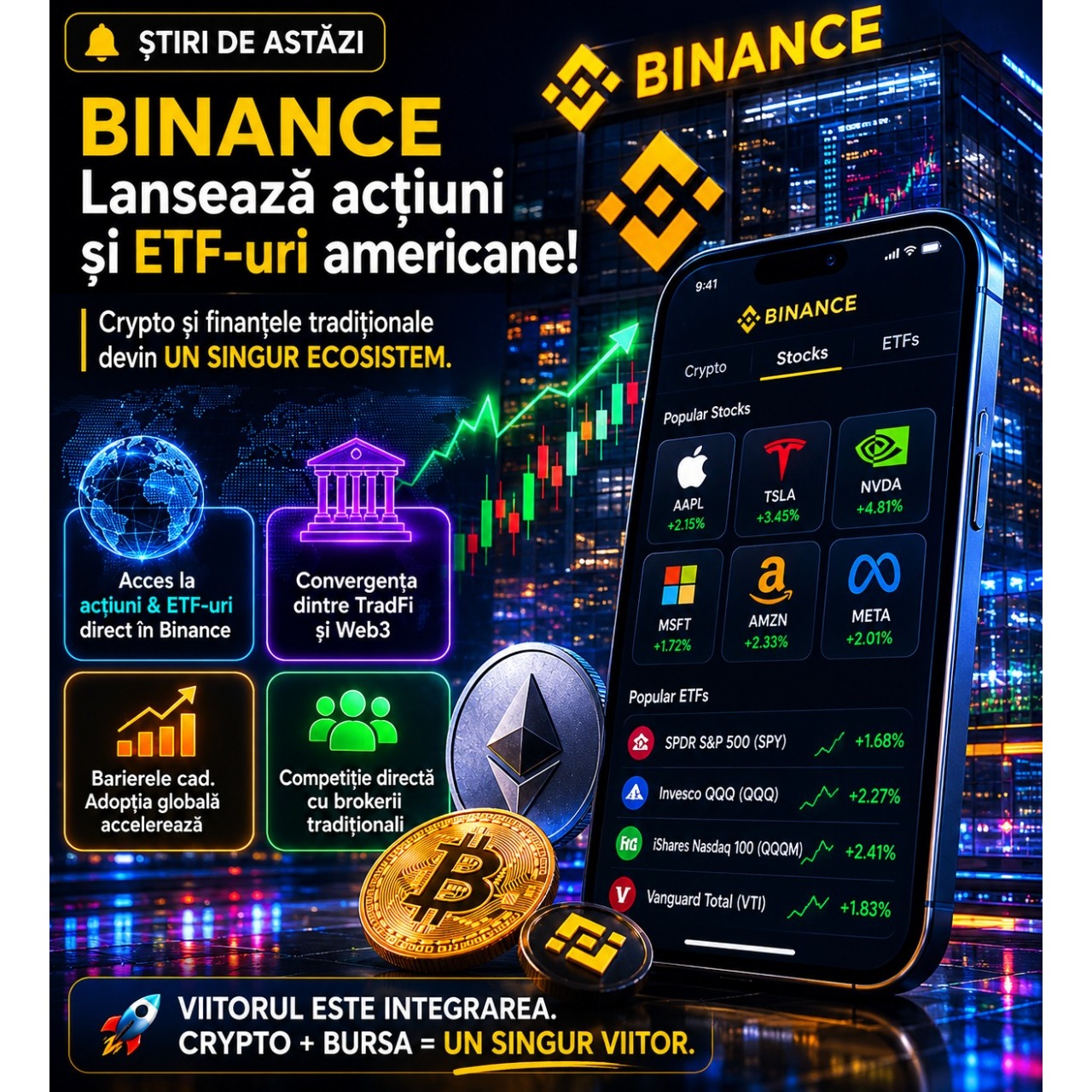
Cea mai mare platformă crypto din lume, Binance, a anunțat lansarea tranzacționării de acțiuni și ETF-uri americane direct din ecosistemul său. Mișcarea marchează o nouă etapă în convergența dintre crypto și finanțele clasice.
📈 Ce înseamnă asta pentru piață?
• Investitorii pot accesa atât crypto, cât și acțiuni din aceeași platformă
• Barierele dintre TradFi și Web3 devin tot mai mici
• Adopția activelor digitale continuă să avanseze la nivel global
• Companiile crypto concurează tot mai direct cu brokerii tradiționali
🌍 În paralel, piețele globale urmăresc cu atenție evoluțiile geopolitice și impactul acestora asupra energiei, inflației și apetitului pentru risc. Petrolul se menține aproape de 95$/baril, iar investitorii rămân precauți.
⚡ Mesajul este clar: viitorul finanțelor nu mai este despre alegerea dintre crypto și bursă. Este despre integrarea lor.
👀 Crezi că în 5 ani vom mai face diferența între o platformă crypto și un broker tradițional?
#Binance #Bitcoin #Crypto #ETF #Stocks #Investing #TOKERO #SocialFi #Web3 #Fintech #CryptoNews
Cea mai mare platformă crypto din lume, Binance, a anunțat lansarea tranzacționării de acțiuni și ETF-uri americane direct din ecosistemul său. Mișcarea marchează o nouă etapă în convergența dintre crypto și finanțele clasice.
📈 Ce înseamnă asta pentru piață?
• Investitorii pot accesa atât crypto, cât și acțiuni din aceeași platformă
• Barierele dintre TradFi și Web3 devin tot mai mici
• Adopția activelor digitale continuă să avanseze la nivel global
• Companiile crypto concurează tot mai direct cu brokerii tradiționali
🌍 În paralel, piețele globale urmăresc cu atenție evoluțiile geopolitice și impactul acestora asupra energiei, inflației și apetitului pentru risc. Petrolul se menține aproape de 95$/baril, iar investitorii rămân precauți.
⚡ Mesajul este clar: viitorul finanțelor nu mai este despre alegerea dintre crypto și bursă. Este despre integrarea lor.
👀 Crezi că în 5 ani vom mai face diferența între o platformă crypto și un broker tradițional?
#Binance #Bitcoin #Crypto #ETF #Stocks #Investing #TOKERO #SocialFi #Web3 #Fintech #CryptoNews
2
🚨 Piața crypto intră din nou în “fear mode”.
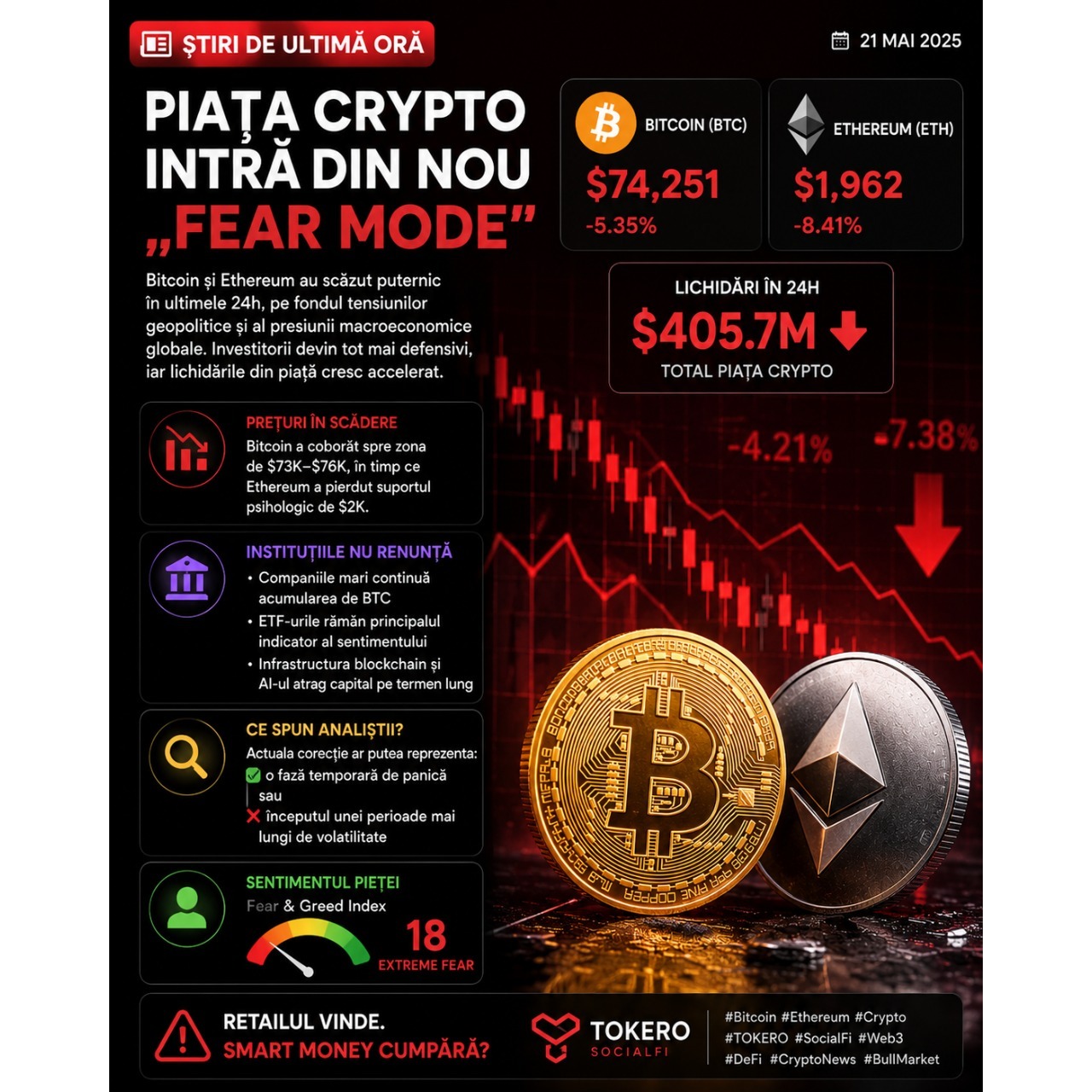
Bitcoin și Ethereum au scăzut puternic în ultimele 24h, pe fondul tensiunilor geopolitice și al presiunii macroeconomice globale. Investitorii devin tot mai defensivi, iar lichidările din piață cresc accelerat.
📉 Bitcoin a coborât spre zona de $73K–$76K, în timp ce Ethereum a pierdut suportul psihologic de $2K.
În doar o zi, peste $400M au fost lichidați din piața crypto.
🏦 Cu toate acestea, instituțiile nu par să renunțe:
• companiile mari continuă acumularea de BTC
• ETF-urile rămân principalul indicator al sentimentului
• infrastructura blockchain și AI-ul atrag în continuare capital pe termen lung
⚡ Tot mai mulți analiști spun că actuala corecție ar putea reprezenta:
✅ o fază temporară de panică
sau
❌ începutul unei perioade mai lungi de volatilitate
👀 Retailul vinde. Smart money cumpără?
#Bitcoin #Ethereum #Crypto #ETF #TOKERO #SocialFi #Web3 #DeFi #CryptoNews #BullMarket
Bitcoin și Ethereum au scăzut puternic în ultimele 24h, pe fondul tensiunilor geopolitice și al presiunii macroeconomice globale. Investitorii devin tot mai defensivi, iar lichidările din piață cresc accelerat.
📉 Bitcoin a coborât spre zona de $73K–$76K, în timp ce Ethereum a pierdut suportul psihologic de $2K.
În doar o zi, peste $400M au fost lichidați din piața crypto.
🏦 Cu toate acestea, instituțiile nu par să renunțe:
• companiile mari continuă acumularea de BTC
• ETF-urile rămân principalul indicator al sentimentului
• infrastructura blockchain și AI-ul atrag în continuare capital pe termen lung
⚡ Tot mai mulți analiști spun că actuala corecție ar putea reprezenta:
✅ o fază temporară de panică
sau
❌ începutul unei perioade mai lungi de volatilitate
👀 Retailul vinde. Smart money cumpără?
#Bitcoin #Ethereum #Crypto #ETF #TOKERO #SocialFi #Web3 #DeFi #CryptoNews #BullMarket
3
🚨 NVIDIA și AI-ul împing din nou piețele la maxime istorice.
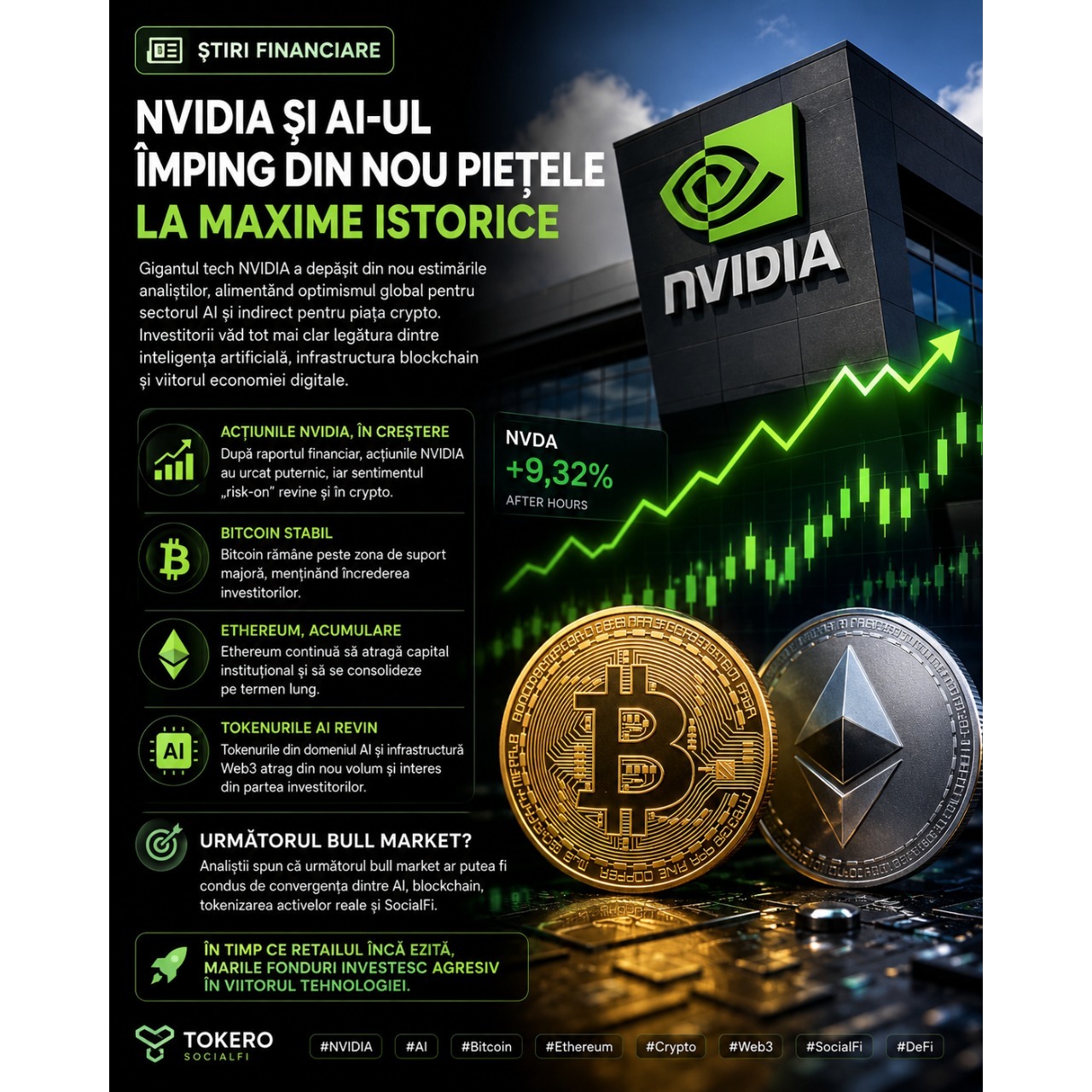
Gigantul tech NVIDIA a depășit din nou estimările analiștilor, alimentând optimismul global pentru sectorul AI și indirect pentru piața crypto. Investitorii văd tot mai clar legătura dintre inteligența artificială, infrastructura blockchain și viitorul economiei digitale.
📈 După raportul financiar, acțiunile NVIDIA au urcat puternic, iar sentimentul “risk-on” începe să revină și în crypto:
• Bitcoin rămâne stabil peste zona de suport majoră
• Ethereum continuă acumularea instituțională
• Tokenurile AI și infrastructura Web3 încep să atragă din nou volum
🤖 Analiștii spun că următorul bull market ar putea fi condus de convergența dintre:
⚡ AI
⚡ Blockchain
⚡ Tokenizarea activelor reale
⚡ SocialFi & creator economy
În timp ce retailul încă ezită, marile fonduri continuă să investească agresiv în infrastructură și tehnologie.
👀 Se pregătește următorul val major pentru crypto?
#NVIDIA #AI #Bitcoin #Ethereum #Crypto #TOKERO #SocialFi #Web3 #DeFi #ArtificialIntelligence
Gigantul tech NVIDIA a depășit din nou estimările analiștilor, alimentând optimismul global pentru sectorul AI și indirect pentru piața crypto. Investitorii văd tot mai clar legătura dintre inteligența artificială, infrastructura blockchain și viitorul economiei digitale.
📈 După raportul financiar, acțiunile NVIDIA au urcat puternic, iar sentimentul “risk-on” începe să revină și în crypto:
• Bitcoin rămâne stabil peste zona de suport majoră
• Ethereum continuă acumularea instituțională
• Tokenurile AI și infrastructura Web3 încep să atragă din nou volum
🤖 Analiștii spun că următorul bull market ar putea fi condus de convergența dintre:
⚡ AI
⚡ Blockchain
⚡ Tokenizarea activelor reale
⚡ SocialFi & creator economy
În timp ce retailul încă ezită, marile fonduri continuă să investească agresiv în infrastructură și tehnologie.
👀 Se pregătește următorul val major pentru crypto?
#NVIDIA #AI #Bitcoin #Ethereum #Crypto #TOKERO #SocialFi #Web3 #DeFi #ArtificialIntelligence
1
🚨 ETF-urile crypto schimbă din nou sentimentul pieței.
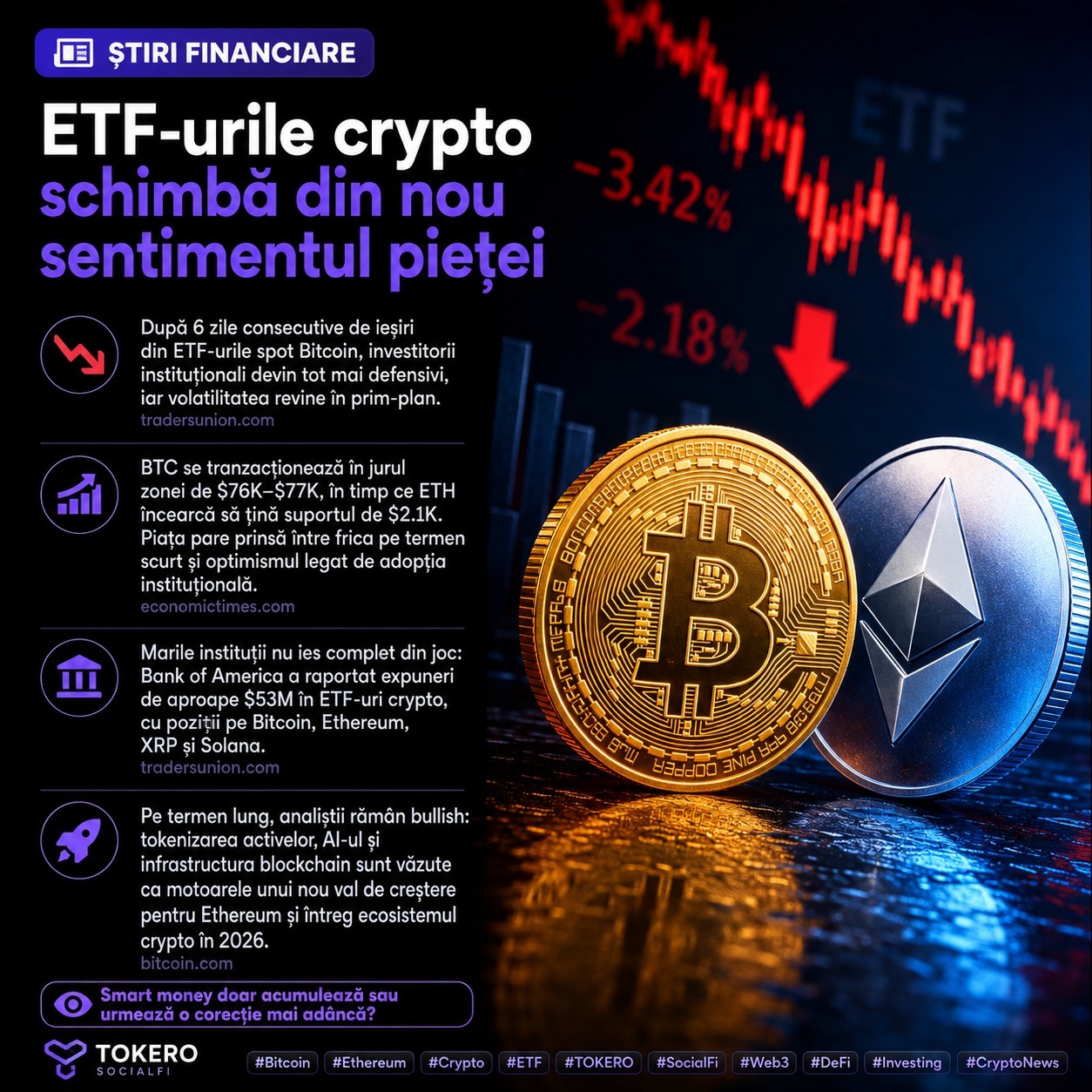
După 6 zile consecutive de ieșiri din ETF-urile spot Bitcoin, investitorii instituționali devin tot mai defensivi, iar volatilitatea revine în prim-plan. În același timp, Ethereum rămâne sub presiune după retrageri de zeci de milioane din ETF-urile ETH.
📉 BTC se tranzacționează în jurul zonei de $76K–$77K, în timp ce ETH încearcă să țină suportul de $2.1K. Piața pare prinsă între frica pe termen scurt și optimismul legat de adopția instituțională.
Totuși, marile instituții nu ies complet din joc:
🏦 Bank of America a raportat expuneri de aproape $53M în ETF-uri crypto, cu poziții pe Bitcoin, Ethereum, XRP și Solana.
Iar pe termen lung, analiștii rămân bullish:
⚡ tokenizarea activelor, AI-ul și infrastructura blockchain sunt văzute ca motoarele unui nou val de creștere pentru Ethereum și întreg ecosistemul crypto în 2026.
👀 Smart money doar acumulează sau urmează o corecție mai adâncă?
#Bitcoin #Ethereum #Crypto #ETF #TOKERO #SocialFi #Web3 #DeFi #Investing #CryptoNews
După 6 zile consecutive de ieșiri din ETF-urile spot Bitcoin, investitorii instituționali devin tot mai defensivi, iar volatilitatea revine în prim-plan. În același timp, Ethereum rămâne sub presiune după retrageri de zeci de milioane din ETF-urile ETH.
📉 BTC se tranzacționează în jurul zonei de $76K–$77K, în timp ce ETH încearcă să țină suportul de $2.1K. Piața pare prinsă între frica pe termen scurt și optimismul legat de adopția instituțională.
Totuși, marile instituții nu ies complet din joc:
🏦 Bank of America a raportat expuneri de aproape $53M în ETF-uri crypto, cu poziții pe Bitcoin, Ethereum, XRP și Solana.
Iar pe termen lung, analiștii rămân bullish:
⚡ tokenizarea activelor, AI-ul și infrastructura blockchain sunt văzute ca motoarele unui nou val de creștere pentru Ethereum și întreg ecosistemul crypto în 2026.
👀 Smart money doar acumulează sau urmează o corecție mai adâncă?
#Bitcoin #Ethereum #Crypto #ETF #TOKERO #SocialFi #Web3 #DeFi #Investing #CryptoNews
9