

🚨 **FINANCE NEWS UPDATE | October 12, 2026** 📈💰
🌍 **Global Markets React as Oil Prices, Inflation & Interest Rates Take Center Stage!**
The financial world is experiencing another eventful week, with investors closely watching major economic developments.
🔥 **Here are the top 5 finance headlines:**
📉 **1. Oil Prices Remain Volatile**
Brent crude traded near $103 per barrel as geopolitical tensions in the Middle East and developments involving Russia and Ukraine influenced energy markets.
💵 **2. US Dollar Remains Strong**
The dollar is trading near an 18-month high as investors assess global uncertainty and upcoming US inflation data.
🏦 **3. Interest Rates Under the Spotlight**
Investors are awaiting fresh inflation figures that could influence the Federal Reserve's next monetary policy decisions.
📊 **4. Stock Markets Show Mixed Signals**
US stock futures edged higher, while Asian markets delivered mixed performances amid uncertainty surrounding energy prices.
🤖 **5. AI Investments & Corporate Earnings in Focus**
Major bank earnings and semiconductor industry updates could influence market sentiment this week.
💡 **The Big Takeaway:**
Markets are balancing economic growth opportunities against inflation, geopolitical uncertainty, and higher borrowing costs.
💬 **What's your outlook for the financial markets this week? Bullish 🐂 or Bearish 🐻?**
👇 Share your thoughts in the comments!
#FinanceNews #StockMarket #Investing #FinancialMarkets #GlobalEconomy #WallStreet #Inflation #InterestRates #MarketUpdate #Finance
🌍 **Global Markets React as Oil Prices, Inflation & Interest Rates Take Center Stage!**
The financial world is experiencing another eventful week, with investors closely watching major economic developments.
🔥 **Here are the top 5 finance headlines:**
📉 **1. Oil Prices Remain Volatile**
Brent crude traded near $103 per barrel as geopolitical tensions in the Middle East and developments involving Russia and Ukraine influenced energy markets.
💵 **2. US Dollar Remains Strong**
The dollar is trading near an 18-month high as investors assess global uncertainty and upcoming US inflation data.
🏦 **3. Interest Rates Under the Spotlight**
Investors are awaiting fresh inflation figures that could influence the Federal Reserve's next monetary policy decisions.
📊 **4. Stock Markets Show Mixed Signals**
US stock futures edged higher, while Asian markets delivered mixed performances amid uncertainty surrounding energy prices.
🤖 **5. AI Investments & Corporate Earnings in Focus**
Major bank earnings and semiconductor industry updates could influence market sentiment this week.
💡 **The Big Takeaway:**
Markets are balancing economic growth opportunities against inflation, geopolitical uncertainty, and higher borrowing costs.
💬 **What's your outlook for the financial markets this week? Bullish 🐂 or Bearish 🐻?**
👇 Share your thoughts in the comments!
#FinanceNews #StockMarket #Investing #FinancialMarkets #GlobalEconomy #WallStreet #Inflation #InterestRates #MarketUpdate #Finance
1
📉 Markets are sending a clear message: higher rates and fiscal risk are back in focus.
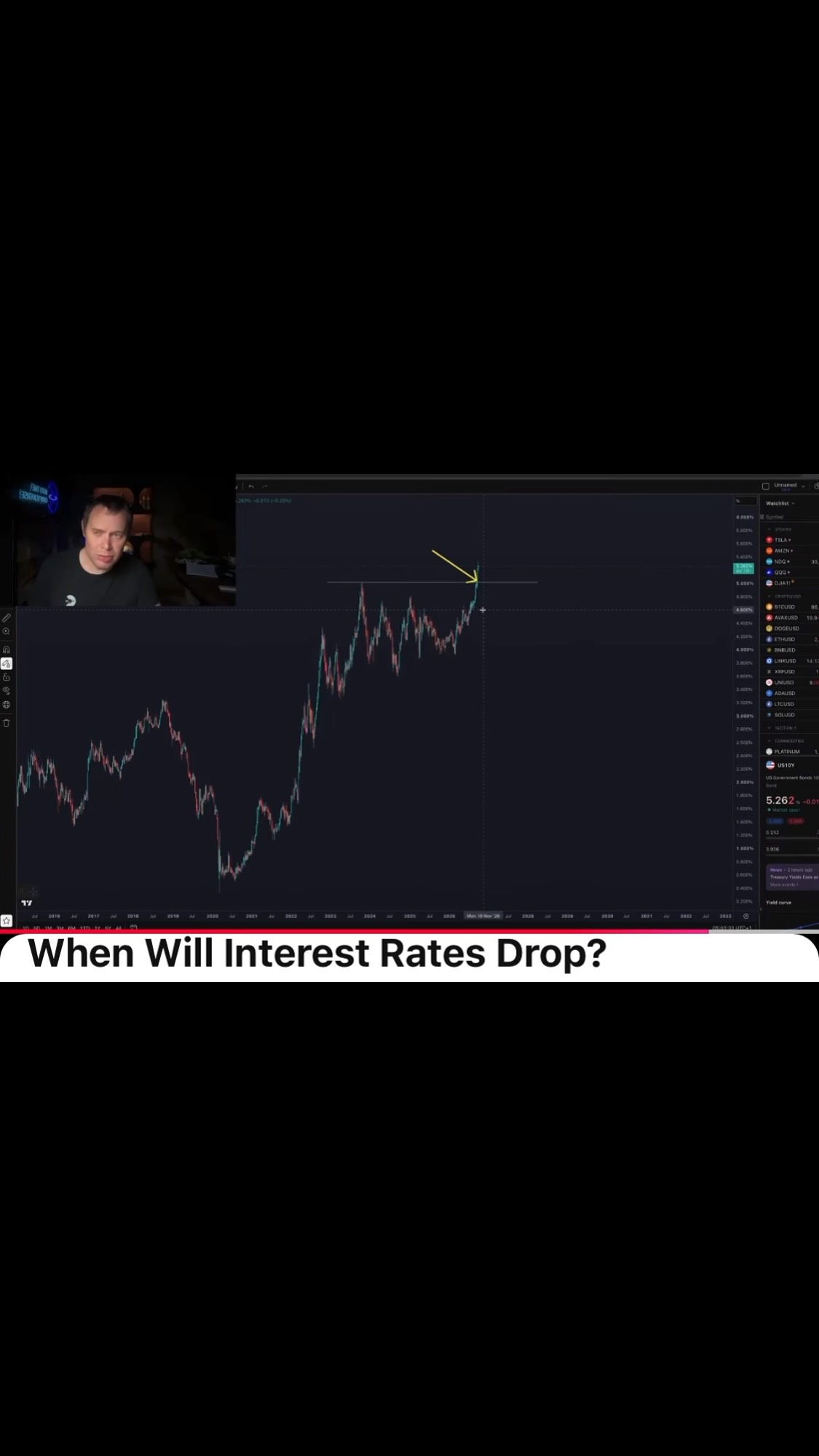
Global bond markets remain under pressure, with the U.S. 10-year Treasury yield around **5.25%** as investors weigh persistent inflation risks, elevated energy prices, and resilient economic growth.
In Europe, the **euro has fallen to a 17-month low near $1.12**, while concerns about France’s debt and wider political uncertainty are pushing European borrowing costs higher.
Meanwhile, oil remains a major wildcard. Brent recently traded around the **$100-a-barrel level**, keeping inflation expectations—and therefore interest-rate expectations—under pressure.
Yet equities remain surprisingly resilient, with U.S. technology shares continuing to attract investors despite sharply higher bond yields.
**The big theme:** markets are balancing strong growth and AI optimism against expensive money, geopolitical risk, and deteriorating government finances.
For investors, the next moves in **inflation, oil prices, and sovereign bond yields** may matter just as much as corporate earnings.
#Finance #Markets #Investing #Economy #Stocks #Bonds #InterestRates #WallStreet
Global bond markets remain under pressure, with the U.S. 10-year Treasury yield around **5.25%** as investors weigh persistent inflation risks, elevated energy prices, and resilient economic growth.
In Europe, the **euro has fallen to a 17-month low near $1.12**, while concerns about France’s debt and wider political uncertainty are pushing European borrowing costs higher.
Meanwhile, oil remains a major wildcard. Brent recently traded around the **$100-a-barrel level**, keeping inflation expectations—and therefore interest-rate expectations—under pressure.
Yet equities remain surprisingly resilient, with U.S. technology shares continuing to attract investors despite sharply higher bond yields.
**The big theme:** markets are balancing strong growth and AI optimism against expensive money, geopolitical risk, and deteriorating government finances.
For investors, the next moves in **inflation, oil prices, and sovereign bond yields** may matter just as much as corporate earnings.
#Finance #Markets #Investing #Economy #Stocks #Bonds #InterestRates #WallStreet
1


How much could your mortgage go up?
This table gives a rough idea of how much extra you might pay each month if your mortgage rate rises by 1 or 2 percentage points.
It can be useful if you are:
🏠 Coming off a fixed-rate deal and want a rough idea of what a higher remortgage rate could do to your monthly payment
or
📈 On a tracker mortgage and wondering how much your payment could rise if the Bank of England increases interest rates and your lender passes that on.
A useful rule of thumb from the table is:
For every £100,000 of mortgage, a 1 percentage point rise adds roughly £58 a month. A 2 percentage point rise adds roughly £119 a month.
So, for example:
* a £200,000 mortgage could rise by about £117 a month if your rate rose by 1%
* the same mortgage could rise by about £239 a month if your rate rose by 2%
Assumptions used in the table:
* repayment mortgage
* 25 years remaining
* 1% rise = 4.5% to 5.5%
* 2% rise = 4.5% to 6.5%
* figures rounded to the nearest pound
*
Your actual increase will depend on your current rate, new rate, mortgage balance and remaining term, so this is an illustration, not a quote.
And just to be clear, a 1% rate rise here means one percentage point — for example 4.5% to 5.5%, not 4.5% to 4.55%.
For a more personal calculation CLICK THE LINK IN BIO. to use my intrerest rates rise calculator
#mortgage #remortgage #interestrates #personalfinance #ukmoney
This table gives a rough idea of how much extra you might pay each month if your mortgage rate rises by 1 or 2 percentage points.
It can be useful if you are:
🏠 Coming off a fixed-rate deal and want a rough idea of what a higher remortgage rate could do to your monthly payment
or
📈 On a tracker mortgage and wondering how much your payment could rise if the Bank of England increases interest rates and your lender passes that on.
A useful rule of thumb from the table is:
For every £100,000 of mortgage, a 1 percentage point rise adds roughly £58 a month. A 2 percentage point rise adds roughly £119 a month.
So, for example:
* a £200,000 mortgage could rise by about £117 a month if your rate rose by 1%
* the same mortgage could rise by about £239 a month if your rate rose by 2%
Assumptions used in the table:
* repayment mortgage
* 25 years remaining
* 1% rise = 4.5% to 5.5%
* 2% rise = 4.5% to 6.5%
* figures rounded to the nearest pound
*
Your actual increase will depend on your current rate, new rate, mortgage balance and remaining term, so this is an illustration, not a quote.
And just to be clear, a 1% rate rise here means one percentage point — for example 4.5% to 5.5%, not 4.5% to 4.55%.
For a more personal calculation CLICK THE LINK IN BIO. to use my intrerest rates rise calculator
#mortgage #remortgage #interestrates #personalfinance #ukmoney

18
📈 Finance Update: What Markets Are Watching Right Now
Global markets are entering October with plenty to digest.
Bond yields remain elevated as investors reassess inflation and the path for interest rates, while oil-market volatility continues to feed concerns about price pressures. At the same time, China is signaling fresh measures to support its slowing economy and stabilize the property sector.
Meanwhile, major equity markets are still holding relatively firm, keeping the debate alive over whether strong corporate earnings can offset higher borrowing costs.
The big themes to watch next:
• Interest-rate expectations
• Oil and inflation
• China’s stimulus measures
• Corporate earnings and equity valuations
October could be an important month for investors as macroeconomic risks collide with resilient markets.
#Finance #Markets #Investing #StockMarket #Economy #InterestRates #WallStreet
Global markets are entering October with plenty to digest.
Bond yields remain elevated as investors reassess inflation and the path for interest rates, while oil-market volatility continues to feed concerns about price pressures. At the same time, China is signaling fresh measures to support its slowing economy and stabilize the property sector.
Meanwhile, major equity markets are still holding relatively firm, keeping the debate alive over whether strong corporate earnings can offset higher borrowing costs.
The big themes to watch next:
• Interest-rate expectations
• Oil and inflation
• China’s stimulus measures
• Corporate earnings and equity valuations
October could be an important month for investors as macroeconomic risks collide with resilient markets.
#Finance #Markets #Investing #StockMarket #Economy #InterestRates #WallStreet