In her latest column, @LedaGlyptis explores uncertainty, false prophets, AI hype and why spending less time on projections and more time on understanding interdependence may be the wiser path.
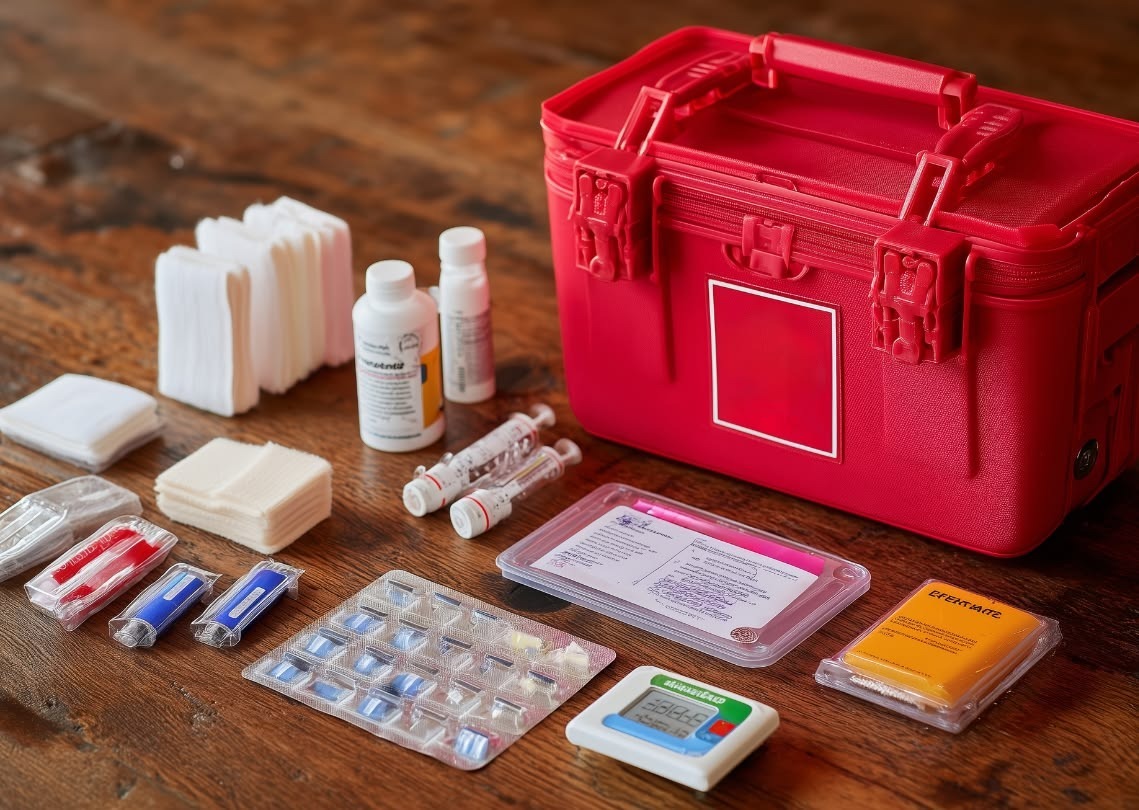
Imagine a powder that stops serious bleeding in about one second. 🩸
Scientists at KAIST in South Korea have created one, called AGCL. When it touches blood, it instantly turns from a dry powder into a sticky gel that seals the wound. Calcium in the blood is what triggers the reaction, and the gel grips the tissue so it stays in place.
Why a powder? Regular bandages are flat, so they struggle with deep or oddly shaped wounds. A powder can flow into tight spaces and fill them, which is exactly where bleeding is hardest to control.
In lab and animal tests, the results were impressive: 🔹 It soaked up about 7 times its own weight in blood 🔹 It stayed stuck to wet, moving tissue 🔹 It beat a commercial product called TachoSil at reducing blood loss and stopping bleeding faster 🔹 It showed signs of healing, with new blood vessels and collagen forming 🔹 It stays effective for up to 24 months in normal storage
The important catch: this has only been tested on animals so far. It’s still experimental, and human studies are needed before anyone knows if it’s safe and effective for people.
If a simple powder could one day be in every first aid kit, how much safer would that make you feel? 🚑
Scientists just made a drone that’s almost invisible, and the trick is surprisingly simple: spin it really fast. 🚁
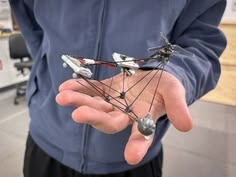
Engineers at Northwestern University built the Phantom Twist, a palm-sized drone that weighs little more than an ounce and spins 25 times per second. At that speed, the human eye can’t keep up, so instead of a drone you see a faint haze.
It isn’t truly invisible. Our eyes collect light over a short window of time, a bit like a camera’s exposure, so anything spinning fast enough blurs into the background. The drone is also almost entirely transparent, which helps it blend in even more. Rather than hiding the drone with cameras or special materials, the team designed it around how humans perceive motion.
To get the design right, they used AI to generate up to 20,000 possible drone layouts, then let optimization software find the one that flies steadily and disappears best.
The researchers see uses in inspecting infrastructure without distracting drivers and in tracking wildlife less invasively. There’s one catch: it’s still pretty noisy, so future versions will need quieter propulsion and more transparent parts to live up to the ghostly name.
Spinning fast enough to disappear: is this genius engineering or a little bit spooky? 🤔
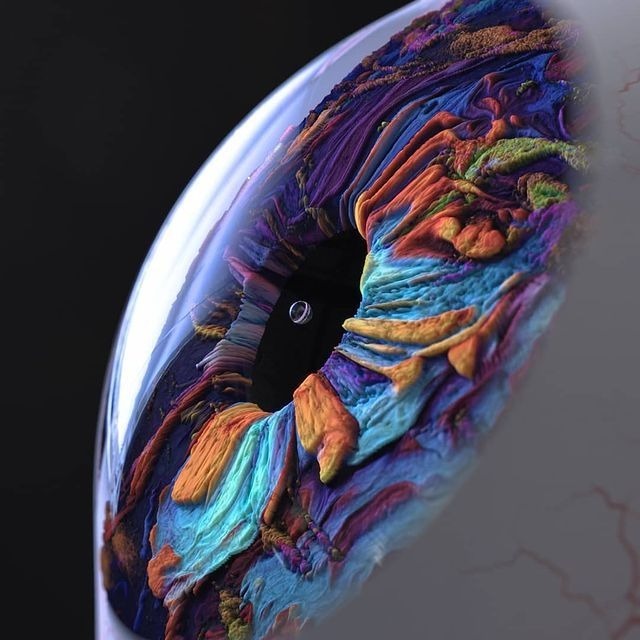
Scientists have grown a tiny human eye lens in the lab for the first time, and it could change how we treat cataracts.
Researchers in the UK and Japan took adult cells, reprogrammed them into a stem cell-like state, and spent eight weeks coaxing them to organize into mini lenses. The result closely resembles the real thing, with many of the key biological features of a natural human lens.
That matters because developing human lens tissue is very hard to get and study. These lab-grown versions give scientists a new way to test medicines, understand vision diseases and investigate genetic lens disorders that some children are born with.
The longer-term hope is regenerative treatment. Cataracts, where the lens turns cloudy, are currently fixed by replacing the lens with an artificial one. It’s the most common procedure on the NHS, with about 650,000 operations a year. Researchers hope this work could one day reduce the need for full replacement surgery.
It’s still early, and for now these are mini lenses for research rather than a treatment. But it’s a meaningful step toward a very different future for eye care.
If your own cells could one day be used to regrow part of your eye, would you choose that over an artificial replacement? 👁️
What if finding the perfect material for a new battery was as easy as ordering dinner?
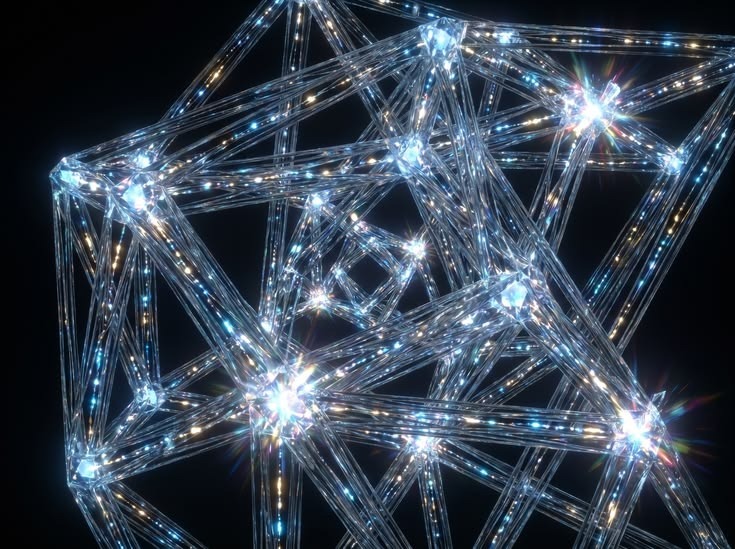
That’s the idea behind a new AI model from MIT. Most materials we rely on, from batteries to electronics, are crystals, which are atoms arranged in precise 3D patterns. The trouble is that today’s AI language models learn from text, not from 3D structures, and the scientific literature mostly covers a handful of well-studied crystal types. So the AI ends up with a narrow, flat view of the material world.
The MIT team built a model that can “see” both the atomic structure and the language describing it. They trained it to pair 3D crystal structures with rich written descriptions covering properties, how the material is made, and what it could be used for. It’s a bit like teaching a brain to link what it sees with what it reads.
The results are promising. When asked to find materials for solid-state lithium-ion battery electrolytes, the model’s top picks included materials that other researchers had independently flagged as promising. It also outperformed models trained on text alone.
The researchers hope it becomes for materials science what AlphaFold became for biology, a tool that connects structure to function and speeds up discovery.
If AI could design any material on demand, what would you want it to create first? 🔬