
When negotiating a pay rise you need to know how much of a £1,000 pay rise do you actually keep?
The answer depends on what you already earn.
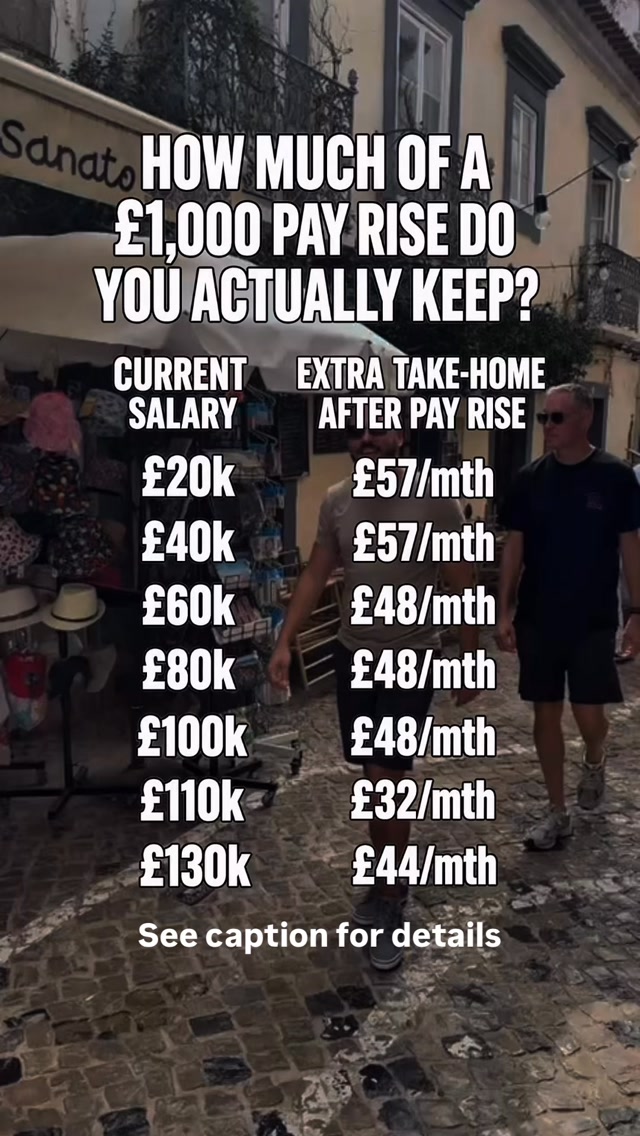
This table shows the extra monthly take-home pay from a £1,000 increase in annual gross salary.
At £20k or £40k, you keep around £57 a month.
At £60k, £80k and £100k, it’s around £48 a month.
At £110k, it falls to roughly £32 a month because of the Personal Allowance taper, which can create an effective 60% income-tax rate on part of your income.
By £130k, it rises again to around £44 a month because the Personal Allowance has already been lost and the marginal income-tax rate is 45%, plus employee National Insurance.
The figures assume:
* you’re employed and paid through PAYE
* you live in England, Wales or Northern Ireland
* standard tax code
* standard employee National Insurance
* minimum auto-enrolment pension contributions using relief at source
* no student loan, salary sacrifice or other deductions
Under relief at source, the minimum employee-side auto-enrolment contribution is typically 5% of qualifying earnings, but only 4% comes from your take-home pay, with basic-rate tax relief making up the other 1%. Employer minimum contributions are generally 3%. Qualifying earnings for 2026/27 run from £6,240 to £50,270.
So the point is simple:
A £1,000 pay rise doesn’t mean £1,000 more in your pocket. And the amount you keep can vary dramatically depending on where you sit in the tax system.
As a general rule of thumb, multiply the figures by five for a £5,000 pay rise, or by ten for a £10,000 rise. However, this won’t be exact if your pay rise crosses key tax thresholds.
#personalfinance #costofliving #ukmoney #personalfinanceuk #moneytips
7