
Planning for retirement can feel overwhelming, but knowing the differences between common retirement accounts can help you make informed decisions.
Here’s a quick breakdown:
💸 401(k) Plans are Employer-Sponsored Accounts
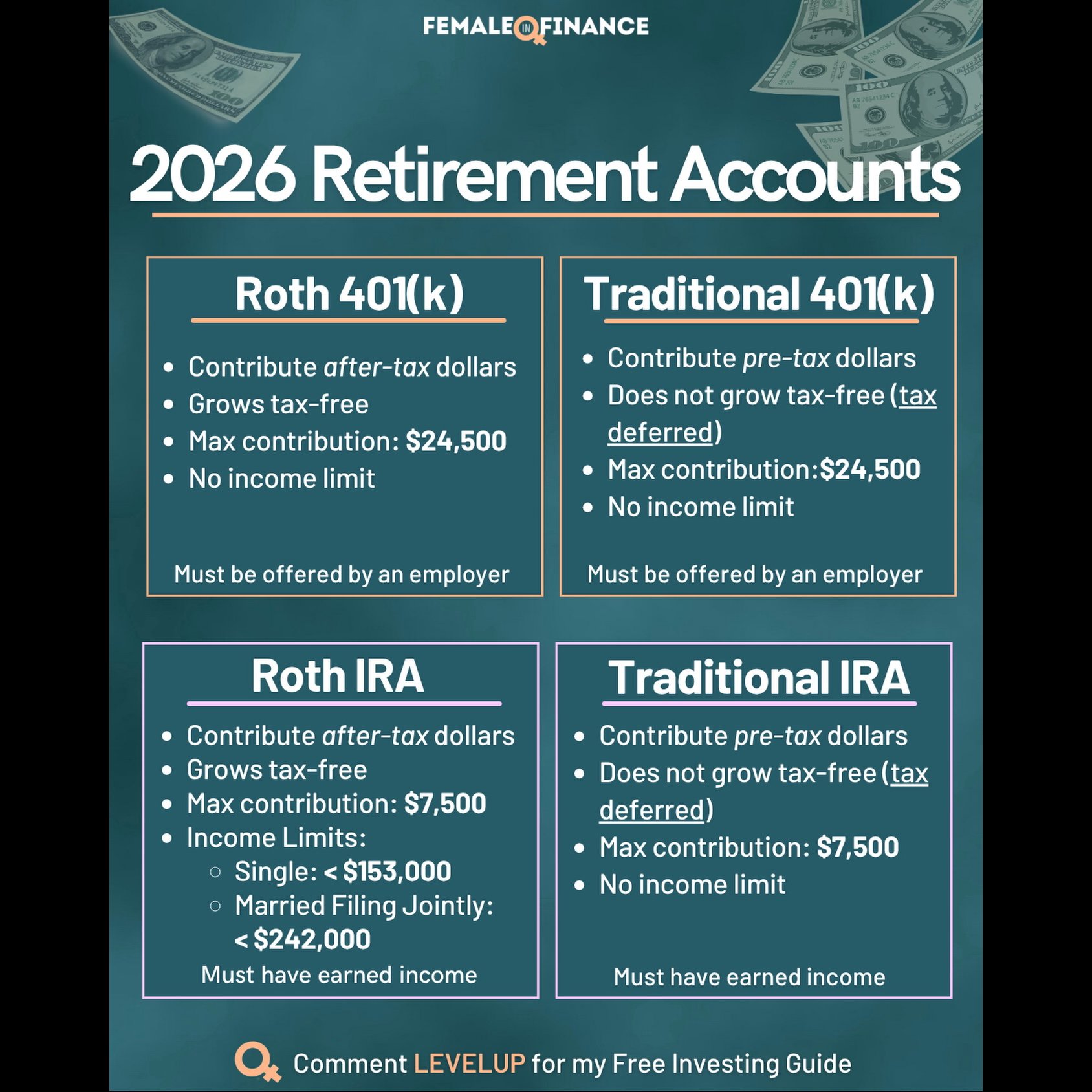
👉🏼 Roth 401(k) allows you to contribute after-tax dollars (taxes are paid upfront). Your money grows tax-free, and withdrawals are tax-free in retirement.
👉🏼 Traditional 401(k) uses pre-tax dollars, which lowers your taxable income today. The money grows tax-deferred, but you’ll pay taxes when you withdraw in retirement.
💸 IRAs are Individual Retirement Accounts that you open on your own as long as you have earned income.
👉🏼 Roth IRA contributions are made with after-tax dollars. The money grows tax-free, and withdrawals are tax-free in retirement. There are income limits: single filers must earn less than $153k, and married couples filing jointly must earn less than $242k. You must have earned income to contribute.
👉🏼 Traditional IRA contributions use pre-tax dollars, offering immediate tax deductions. The money grows tax-deferred, and you’ll pay taxes on withdrawals in retirement.
So which account is right for you?
If you expect to be in a lower tax bracket in retirement, Traditional accounts might make sense. If you expect to be in a higher tax bracket or want tax-free income in retirement, consider Roth accounts.
💸 Comment LEVELUP and I’ll send you my free 2026 Investing Guide! ✨
-Leandra
.
.
.
#retirementplanning #401k #rothira #retirementsavings #financialeducation
594