
🇺🇸 Demographics are reshaping U.S. fiscal dynamics.
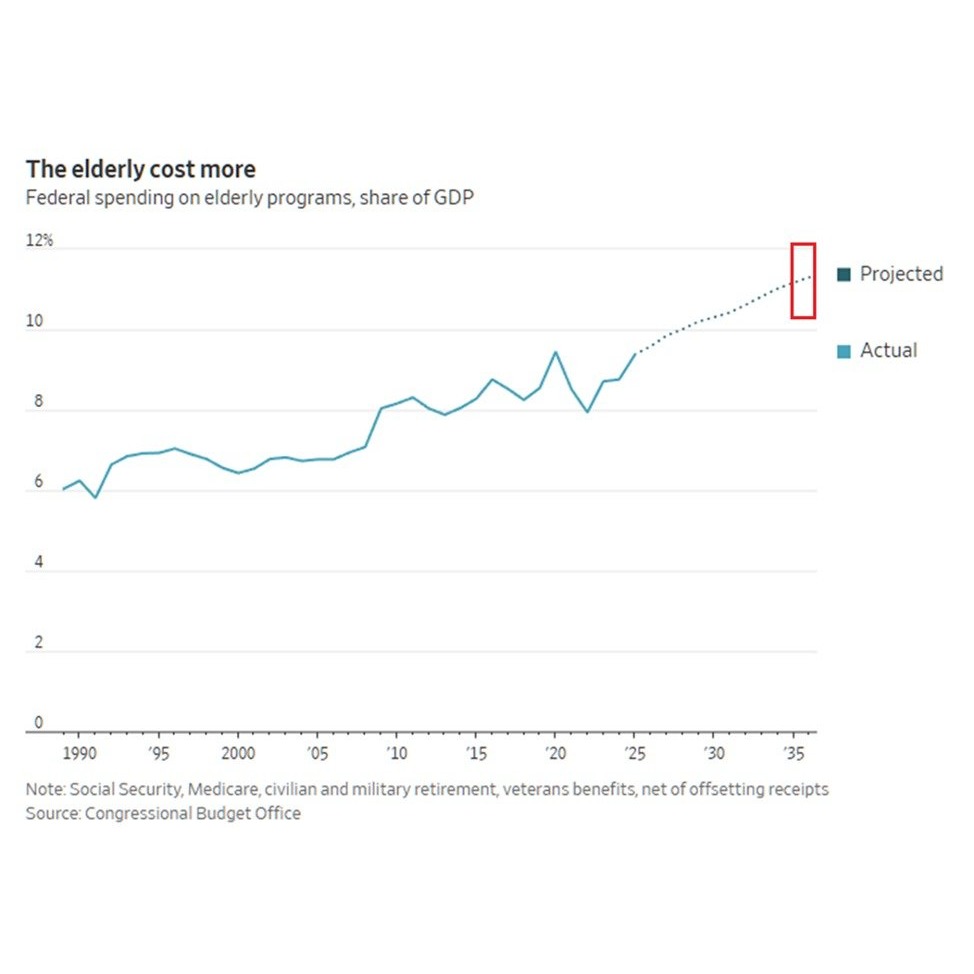
Federal spending on elderly programs has reached a record ~9.4% of GDP, up from ~6.0% in the late 1980s (CBO).
Over the next decade, this is projected to rise toward ~11.3% of GDP, driven by aging demographics, longer life expectancy, and healthcare costs.
Life expectancy at age 65 reached ~19.7 years in 2024, extending the period retirees draw benefits.
Together with rising interest payments, age-related spending is a major contributor to projected deficits.
Without policy changes, Social Security is projected to face funding pressure in the next decade. 📊
Federal spending on elderly programs has reached a record ~9.4% of GDP, up from ~6.0% in the late 1980s (CBO).
Over the next decade, this is projected to rise toward ~11.3% of GDP, driven by aging demographics, longer life expectancy, and healthcare costs.
Life expectancy at age 65 reached ~19.7 years in 2024, extending the period retirees draw benefits.
Together with rising interest payments, age-related spending is a major contributor to projected deficits.
Without policy changes, Social Security is projected to face funding pressure in the next decade. 📊