New analysis by Dr Olegs Cernisevs explores how draft EU payment rules could dramatically expand liability for impersonation fraud, and why many firms may be underestimating what's coming.
Sujata Dasgupta explores how AI is transforming fraud—moving from assistance to orchestration—and how FIs must adapt with AI-powered defences to stay ahead.
And it is one of the most sophisticated schemes I have seen recently.
When a bank card approaches its expiration date, the bank will usually send a replacement. It is a routine process that most customers would have no reason to question.
Now imagine this:
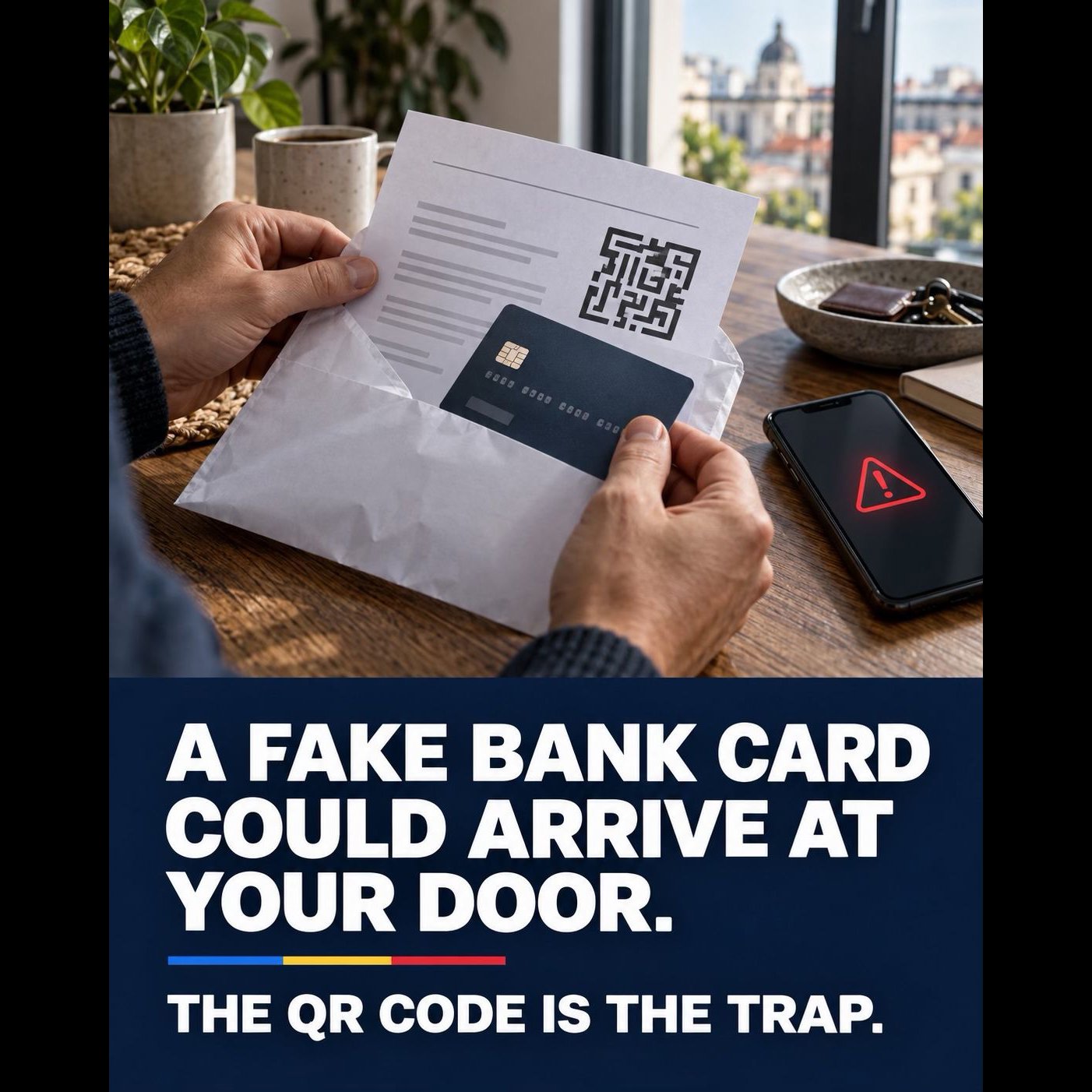
An envelope arrives at your home and appears to come from your bank. The same colours, logo and professional presentation.
Inside, you find a new card with your name printed on it.
Except none of it is real.
The letter says that your old card is about to expire and that the new one must be activated immediately. To complete the activation, you are asked to scan a QR code.
But the code does not take you to the bank’s website.
It opens a cloned page designed to look almost identical to the real one.
You are then asked to provide your login credentials, personal information and possibly the authorization codes received by SMS.
From that moment, the criminals may gain access to your account.
The attack can then continue with a phone call. Someone pretending to represent the bank tells you that the activation failed and asks you to read out the “verification code” sent by SMS.
In reality, that code may authorize a transaction.
This scam is particularly dangerous because it does not begin with a poorly written email or a suspicious text message.
It begins with a physical, personalized item delivered to the correct address.
Producing the card and mailing the letter costs more than running a conventional phishing campaign. That is precisely why the attack may be more carefully targeted.
The scheme was recently reported in Portugal by both authorities and financial institutions. There is currently no public confirmation that it has reached Romania, but the method could easily be replicated.
If you receive a replacement card, do not scan any QR code included in the letter before checking directly through your bank’s official app.
Never enter your PIN, password or SMS authorization codes on a page opened through a QR code.
If you have any doubts, call the bank using the number printed on your existing card or published on its official website — not the contact details included in the letter.
We have learned to be suspicious of unexpected emails and messages.
Now we must apply the same caution to envelopes that look perfectly legitimate.
Would you have suspected that a bank card delivered to your home could be fake?